

Lira City has prioritised the upgrading of the 5-kilometre Ogwal-Achonga Road and construction of a modern slaughterhouse among its key infrastructure projects under the new Uganda Cities and Municipalities Infrastructure Development (UCMID) programme.
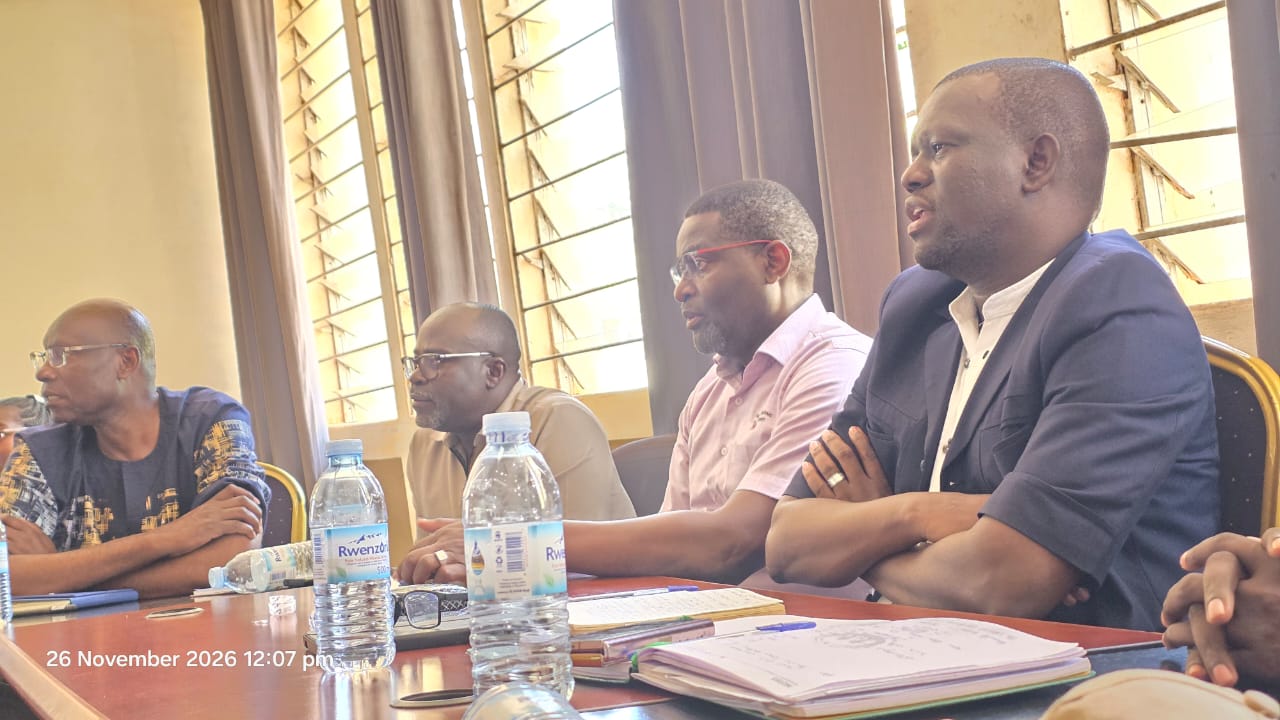
The projects were presented during a World Bank-led implementation support and readiness mission to the city on November 26, 2026, as government officials assessed its preparedness for the programme’s implementation.
The delegation was welcomed by Lira City Mayor Sam Atul, who outlined the city’s development priorities and expressed readiness to work with the programme implementation team.
The proposed Ogwal-Achonga Road project is among the city’s first planned investments under the programme.
The team also inspected a proposed 3.3-acre site, located a few kilometres from the city centre, where a modern slaughterhouse is expected to be constructed.

The planned facility will incorporate a biogas plant to support waste management and promote environmentally sustainable operations.
The proposed investment is expected to replace the existing dilapidated slaughterhouse, which currently employs approximately 200 people and handles between 18 and 30 cattle daily.
Eng. Stephen Ajalu, who headed the World Bank delegation, said cities would receive more than 40 per cent of the programme’s budget, emphasising the importance of ensuring that infrastructure investments translate into employment opportunities.
“Job creation must be intentional in all projects you undertake, whether short-term, long-term, permanent or otherwise,” Ajalu said.
He urged city authorities to consider population growth and emerging economic needs when planning infrastructure projects rather than concentrating solely on constructing attractive roads.
The delegation also challenged the city leadership to strengthen accountability, stakeholder engagement, responsiveness and accuracy in project reporting.
Lira City is building on achievements registered under previous phases of the Uganda Support to Municipal Infrastructure Development (USMID) programme, which supported the tarmacking of six roads, development of two public parks and expansion of green spaces.
The six roads include Obangakene, Noteber, Aber, Olwol, Uhuru and Boundary roads, with a combined reported length of 2.177 kilometres.
The completed infrastructure incorporated underground utility ducts, drainage systems, parking lanes, pedestrian walkways, green islands and solar streetlights.
The programme also supported the development of Children’s Park in Lira City West and Coronation Park, also known as Mayor’s Garden.
A total of 1,528 trees were planted, while 28,321 square metres of land was greened.
According to the city, the investments contributed to an increase in local revenue from Shs1.66 billion to Shs2.65 billion.
Improved street lighting also stimulated night-time economic activities, creating opportunities for young people, boda-boda riders, vendors, salons and restaurants, while enhancing security for women and traders.
The UCMID programme, covering the 2026–2032 period, is designed to build on these achievements while addressing emerging urban infrastructure and service delivery challenges.
Under the new funding arrangement, 46.3 per cent of the programme’s resources, equivalent to $250 million, is allocated to 10 cities, while the remaining funding targets 26 municipalities and 13 district local governments hosting refugees.
The programme focuses on five pillars: urban roads and mobility; drainage and flood management; nature-based and green infrastructure; sustainable solid waste management; and local economic development.
Lira City has two administrative divisions, Lira City East and Lira City West, a reported population of 304,057 and a total land area of 310.6 square kilometres, of which 151.5 square kilometres is planned.