

As Sudan’s army seeks foreign military backing, negotiations involving naval facilities, port infrastructure and mineral resources are raising concerns about the country’s ability to retain control of its strategic assets beyond the war.
Sudan’s battlefields may be thousands of kilometres from some of the world’s major geopolitical centres, but the country’s Red Sea coastline is increasingly drawing the attention of foreign powers seeking a foothold in a strategically important maritime corridor.
With the war between the Sudanese Armed Forces and the Rapid Support Forces showing no immediate prospect of ending, military cooperation with Turkey and negotiations with Russia are bringing the future of Sudan’s ports into sharper focus.
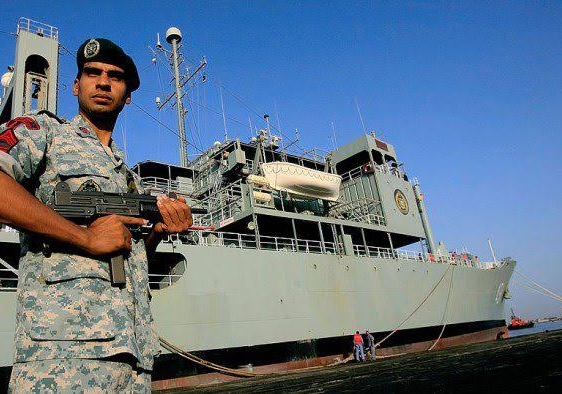
At the centre of the emerging contest is Port Sudan, which has become the army-controlled government’s principal administrative and logistical hub since fighting erupted in April 2023. Its location along the Red Sea makes it valuable not only to Sudan but also to countries seeking access to shipping routes linking the Indian Ocean to the Suez Canal.
Recent reports suggest that Sudan’s military authorities are exploring arrangements that could give foreign powers access to naval facilities and economic opportunities in return for military assistance and investment.
A visit by Turkish naval and shipyard officials to Sudan between November 2 and 5 has reinforced speculation about Ankara’s expanding role. The delegation reportedly inspected maintenance and repair facilities at the Port Sudan naval base.
Italian news agency Nova subsequently reported on November 11 that discussions had emerged over a possible Turkish naval facility on the Sudanese coast. The report also suggested that Russia could potentially benefit from access to the proposed facility, although no confirmed agreement has been made public.
The reported discussions illustrate how Sudan’s need for military support could intersect with the strategic ambitions of countries seeking a stronger presence along the Red Sea.
Turkey’s involvement is not limited to maritime cooperation. The Washington Post reported in March 2025 on the supply of Turkish drones and ammunition to the Sudanese army. A September 2026 report by the Independent International Fact-Finding Mission for Sudan also examined evidence concerning the use of Turkish-made Akinci drones in the conflict.
For Ankara, deeper cooperation with Sudan could strengthen its position in the Horn of Africa and the wider Red Sea region. For Sudan’s army, the relationship offers potential access to military equipment, technical expertise and maritime infrastructure support.
Russia’s ambitions, however, appear to extend beyond technical cooperation. The Wall Street Journal reported in December 2025 that Sudan had offered Moscow a 25-year arrangement allowing the deployment of up to 300 military personnel and the docking of four warships at a proposed naval facility.
In exchange, Russia was expected to provide weapons and economic cooperation, including opportunities in the mining sector.
The issue returned to diplomatic discussions in late October 2026, with Sudan Tribune reporting that Sudan had proposed a free economic zone on the Red Sea during talks with Russian officials. The discussions reportedly included a possible logistical support facility and investment in gold, copper and other minerals.
The proposals have yet to establish a publicly confirmed permanent Russian naval presence in Sudan. Nevertheless, they demonstrate the potential value of the country’s coastline in negotiations with external powers.
The implications extend beyond the military dimension. Sudan’s ports are essential to its imports, exports and humanitarian supply chains. Any long-term foreign military arrangement involving these facilities could influence how the country’s maritime infrastructure is managed after the conflict.
There are also questions about the relationship between military assistance and access to natural resources. If weapons, logistical support and economic investment are negotiated against long-term concessions, a future civilian administration could inherit agreements concluded under wartime pressure.
Russia’s wider military logistics activities in Africa add another dimension to the debate. An investigation by Defense News published on April 30 documented at least 167 cargo flights between Russia and Algeria between March 2025 and April 2026, prompting scrutiny of possible supply routes for Russian military equipment to African destinations.
Separate reports have also drawn attention to aircraft movements involving Algeria’s Boufarik Military Base. However, claims linking the base directly to weapons transfers to Sudan require further independent verification.
Ultimately, Sudan’s challenge may not simply be securing foreign military support to sustain its war effort, but determining the price at which that support is obtained.
For a country whose coastline provides access to one of the world’s most important maritime corridors, decisions made during the conflict could shape its economic and security relationships for decades.
The question facing Sudan is whether foreign partnerships will help rebuild its strategic infrastructure or leave future governments negotiating over assets whose terms were determined during a war they did not necessarily choose.