
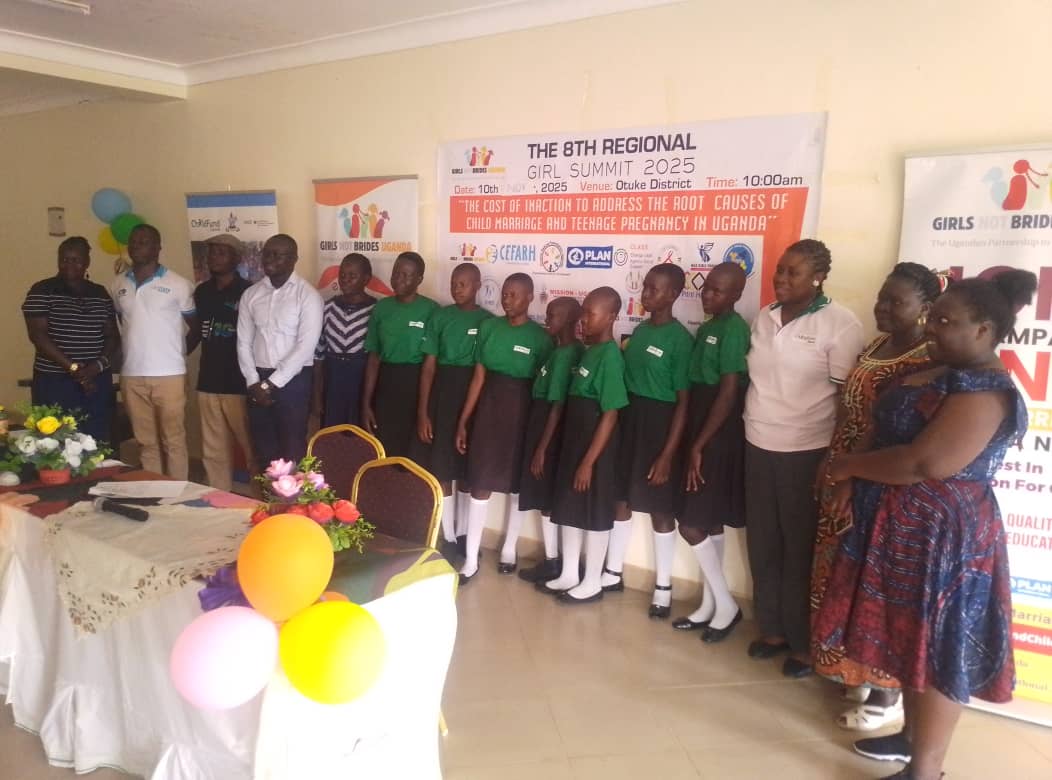

Otuke, Uganda | Nearly half of teenage girls in Northern Uganda are affected by early marriage and teenage pregnancy, according to newly released statistics highlighting a deepening crisis in the region.
The findings were revealed on Monday, November 10, 2025, during a community dialogue organized by Fountain of Life Uganda with support from Child Fund, as part of activities marking eight years of Girls Not Brides Uganda’s campaign to end child marriage and teenage pregnancy.
The dialogue, held at Otuke Business Centre, was convened under the theme: “The Cost of Inaction in Addressing the Root Causes of Child Marriage and Teenage Pregnancy in Uganda.”
The event brought together teachers, pupils from Orum and Adwari Primary Schools, Otuke District officials, cultural actors, women leaders, parents, and members of Girls Not Brides Uganda from across Northern Uganda, all united in seeking solutions to what stakeholders described as a pressing social emergency.
According to presentations at the dialogue, Lango Sub-region alone accounts for 22% of all early marriage and teenage pregnancy cases recorded nationally.
Speaking at the event, Molly Akello Bella, Coordinator of Fountain of Life Uganda, said the situation requires coordinated community involvement.
“The numbers in Lango are worrying. We need cultural leaders, parents, and policy implementers to work together if we are to protect the girl child,” Akello said.
In the Acholi Sub-region, the situation is equally severe.
Geoffrey Ochan of Vision for Children & Youth Forum revealed that over 16,000 teenage pregnancies were recorded across Gulu, Amuru, Nwoya, Agago, Lamwo, Pader, and Kitgum districts in 2025 alone.
“The prolonged effects of the Lord’s Resistance Army conflict, poverty, and limited access to reproductive health information continue to expose girls to exploitation,” Ochan noted.
He cited limited guidance at home, economic pressures, and harmful cultural norms among key contributors.
Representing Child Fund, Irene Naiga urged parents to provide emotional support to their daughters rather than pushing them into early marriage in search of financial relief.
The Senior Community Development Office (SCDO), represented by Moses Adyeny, also raised concern over the high cases in Otuke District, revealing 1,223 cases of teenage pregnancies recorded between January and October 2025.
He pointed to lack of parental supervision, early marriage traditions, and attendance of unsupervised night events as contributing risks.
Meanwhile, Patrick Ochero, Senior Education Officer Otuke, recommended comprehensive sexuality education, increased parental engagement, and retention of girls in school as sustainable preventive measures.
The District Education Officer (DEO), Lucy Acheng, called on senior women teachers to intensify mentorship programs for girls, particularly on menstrual health management, and encouraged headteachers to budget for girl-focused support activities.
The event concluded with a strong call for collaborative efforts among parents, cultural institutions, district leadership, schools, and civil society organizations to address the root causes of child marriage and teenage pregnancy and safeguard the future of girls in Northern Uganda.