
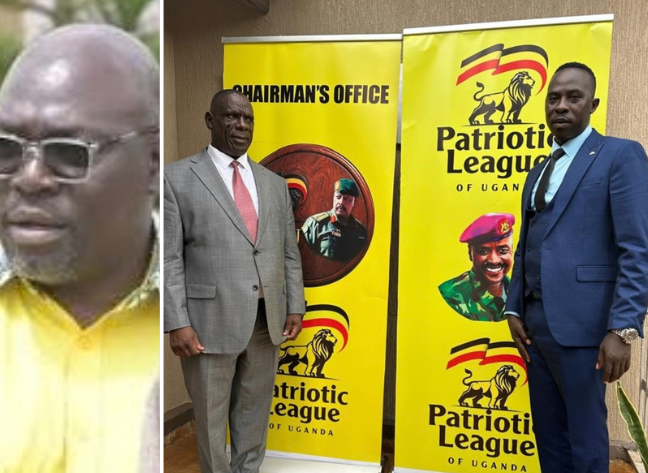

Barely months into the new parliamentary term, political conversations around Lira City East Division are already looking beyond the 12th Parliament, with a new generation of aspirants beginning to position themselves for the 2031 race.
Among those making an early entry is Desmond Philips Otema, who has publicly expressed interest in contesting for the Lira City East Division parliamentary seat in the 13th Parliament.
Otema’s early move has added another layer to a constituency that only recently concluded a closely contested parliamentary election. In January, National Resistance Movement (NRM) candidate Denis Alyela Omodi defeated Uganda People’s Congress (UPC) candidate James Ocen in a narrow race, polling 17,495 votes against Ocen’s 17,319 — a margin of 176 votes.
Omodi subsequently became the new representative for Lira City East, succeeding UPC president Jimmy Akena Obote. Parliament’s official membership records list Omodi as the NRM representative for Lira East Division in the 12th Parliament.
But while the new MP settles into his first months in office, Otema is already looking ahead. His recent visit to the Patriotic League of Uganda (PLU) headquarters in Kampala has attracted attention, particularly because it comes at a time when his political ambitions for 2031 are becoming more public.
Asked whether the visit was merely personal or part of his political plans, Otema said it formed part of his programme, endorse Gen. Muhoozi Kainerugaba for presidency in the next general election and indicated that he intends to pursue the PLU ticket. His position places him among the early political actors beginning to build a platform long before the next general election.
Otema says his interest is driven by what he sees as gaps in service delivery and opportunities for young people. His earlier statements on the 2031 bid have focused particularly on unemployment, access to government programmes, and the need for stronger representation of residents.
If elected in 2031, Otema says his first priorities would include tackling unemployment among both educated and uneducated young people and ensuring that government programmes designed for youth actually reach their intended beneficiaries. He also says he would push for improvement and tarmacking of roads in the division and advocate for better stocking of government health facilities with essential medicines.
The emphasis on youth programmes comes against a wider national policy environment in which programmes such as the Parish Development Model, Youth Livelihood Programme, and Emyooga are intended to support household incomes and enterprise development. Otema argues that the challenge is ensuring that ordinary residents can effectively access such opportunities.
For Otema, however, the political question goes beyond programmes and promises. He has also taken aim at the role of campaign handouts in Ugandan politics, arguing that voters can be influenced by short-term financial benefits during election periods.
Otema says such practices can leave voters choosing leaders based on immediate handouts rather than examining what candidates intend to deliver over a full parliamentary term.
His argument is that voters should scrutinise candidates and demand accountability before, during, and after elections.
“People should open their eyes,” is the message Otema is advancing as he begins what could be a five-year political mobilisation effort.
For the incumbent, however, the 2031 conversation comes at a very early stage.
Omodi has only recently entered the 12th Parliament after defeating Ocen in a race that demonstrated how closely divided the constituency can be politically. His campaign had previously emphasised issues including roads, health service delivery, and improving access to public services.
That means the current parliamentary term will ultimately provide the real test of whether the promises made during the 2026 campaign translate into visible results.
Otema’s emergence does not, by itself, determine the direction of the next election. Five years is a long time in politics, and the field of candidates, party tickets, and political alliances can change considerably before 2031.
For now, what is clear is that the political conversation in Lira City East has started unusually early.
Otema is laying down his marker. The incumbent has begun his first term. And voters have five years to watch, compare promises with performance, and decide what issues matter most when the next parliamentary contest arrives.
The 2031 race may be years away, but in Lira City East, the political groundwork has already begun.