
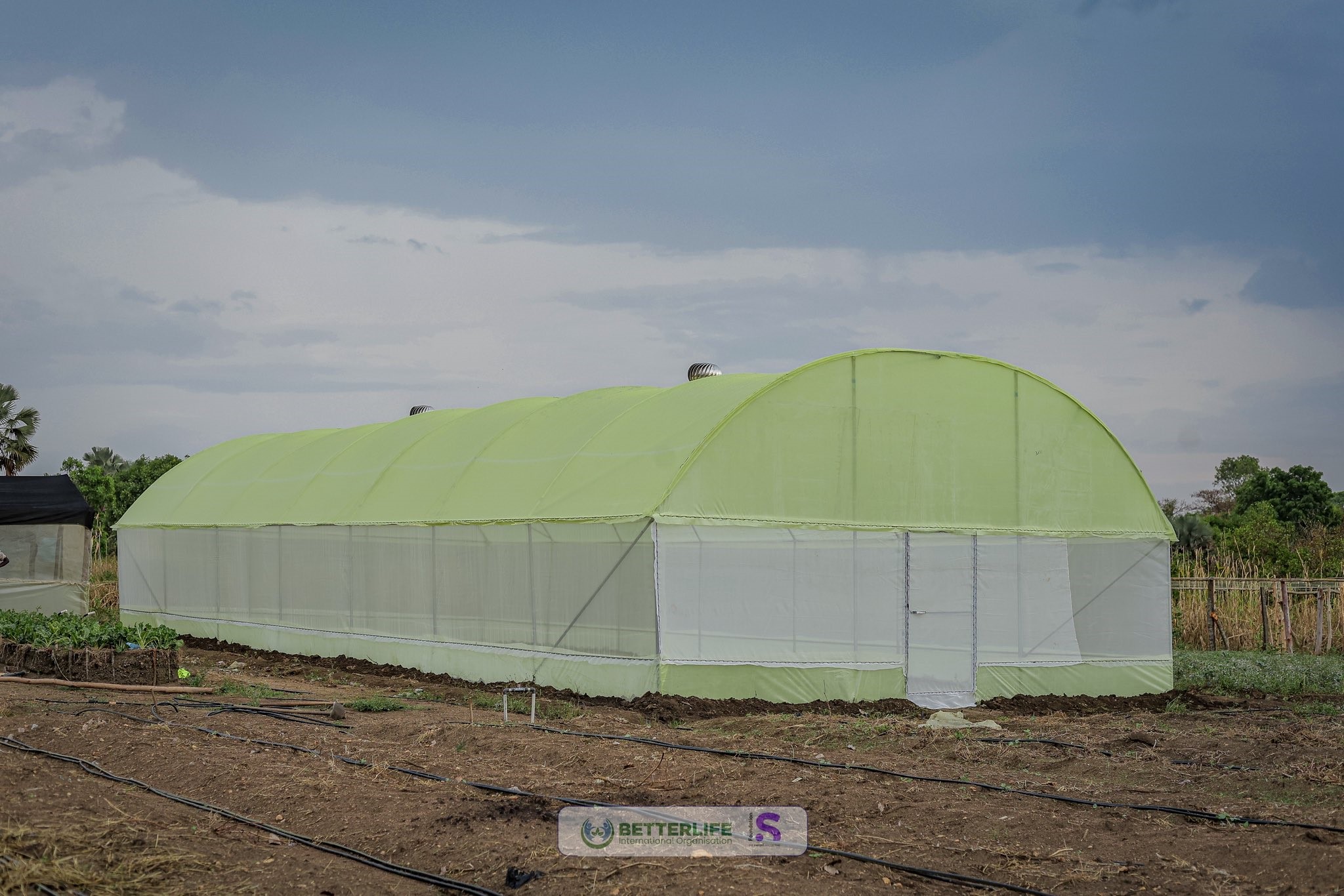

At first glance, it looks out of place: a gleaming green tunnel greenhouse standing on the edge of a refugee settlement in Northern Uganda, surrounded by dry earth and scattered homesteads. But step inside, and the contrast is deliberate. Rows of vibrant vegetables grow in perfect conditions, shaded from the harsh sun, watered by a drip irrigation system, and protected from the pests and diseases that devastate open crops. This is what BetterLife International Organization means when it talks about smart agriculture for climate-affected communities.
The challenge of farming in refugee settlements is formidable. Land is scarce and often of poor quality. Water sources are unreliable. Climate shocks, including prolonged droughts, flash floods, and extreme heat, disrupt growing seasons in ways that are becoming more frequent and more severe. And the farmers themselves, many of whom have been uprooted from familiar landscapes, must learn to grow food in unfamiliar conditions with limited inputs.
BetterLife’s response is to bring proven agricultural technology to the communities that need it most. Greenhouse farming allows crops to be grown year-round regardless of external climate conditions. By controlling temperature, humidity, and light, farmers can grow a wider range of high-value crops, including tomatoes, capsicums, herbs, and leafy vegetables, that command better prices in local markets and provide more diverse nutrition.
The drip irrigation systems installed alongside BetterLife’s greenhouses represent an equally significant innovation for resource-scarce communities. Drip irrigation delivers water directly to plant roots through a network of pipes and emitters, reducing water use by up to 70% compared with traditional flood or furrow irrigation. In settlements where water must often be carried by hand, this efficiency is not just economically beneficial. It is transformative.
“Before the greenhouse, I planted outside and I could lose everything in one week of drought,” said a farmer at the Imvepi settlement. “Inside the greenhouse, my crops are protected. I harvested tomatoes even during the dry season. I sold them at a good price. My children ate well.” Her testimony underscores what BetterLife’s model is built on: resilience is not just about surviving shocks but about having the tools to grow despite them.
BetterLife’s greenhouse and irrigation projects are accompanied by comprehensive training programmes. Farmers learn greenhouse management, including ventilation, pest monitoring, and nutrient application, as well as water management principles and market-oriented production planning. The goal is to ensure that communities can maintain and expand these systems independently, without ongoing dependence on external expertise.
The organisation is also exploring vertical farming and aquaponics, growing plants on vertical structures and combining fish cultivation with hydroponic crop production, as additional methods for maximising food production on minimal land. Both systems are being piloted in partnership with local universities and agricultural extension services.
As climate change makes traditional rain-fed agriculture increasingly unreliable across East Africa, BetterLife’s technology-driven approach offers a compelling vision of what refugee and host community farming can look like. It is a vision grounded not in charity but in capability, in the belief that communities given the right tools will build food security that lasts.
