


Kampala, Uganda | The Government of Uganda, in collaboration with the National Water and Sewerage Corporation (NWSC), has launched a UGX 400 billion water infrastructure upgrade aimed at closing distribution gaps in Kampala and neighbouring urban centres.

The project, which is already underway, is expected to span two to three years.
It will focus on expanding and rehabilitating the city’s water distribution network, which has struggled to deliver water equitably despite sufficient supply.
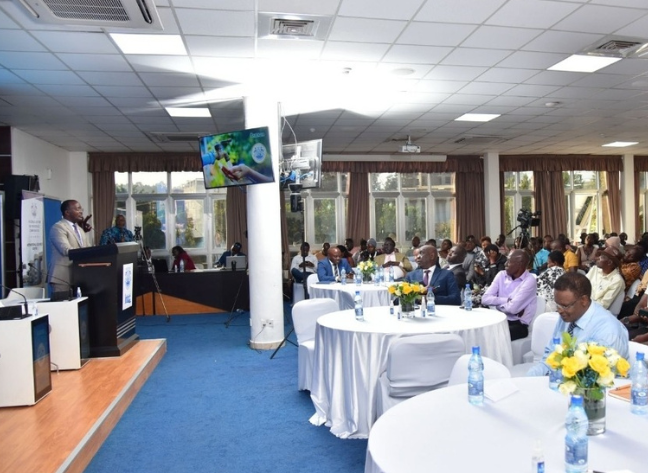
During a stakeholder engagement with selected customers and political leaders from the most water-stressed areas of Kampala, NWSC Executive Director Dr. Silver Mugisha explained that the capital currently produces 400 million litres of water daily, which exceeds the daily demand of 320 million litres.
He noted that the key issue lies not in water production but in the distribution network’s capacity to reach all households reliably.
Dr. Mugisha said the UGX 400 billion investment would be used to lay new pipes, re-zone the network, and upgrade infrastructure to ensure consistent water supply across all areas of the city.
He instructed implementation teams to expedite their work and urged residents to cooperate with contractors working in their communities.
He added that while the long-term project moves forward, NWSC had introduced immediate interventions such as the installation of booster stations and optimisation of existing systems to stabilise supply in the short term.
He stressed that the corporation was not relying solely on the long-term solution but was taking urgent steps to improve service delivery in the affected areas.
Dr. Mugisha also stated that NWSC was working to increase Kampala’s production capacity to 480 million litres per day to meet projected future demand.
He said the Corporation remained committed to improving not only water supply but also sewerage services and emphasised the importance of transparency and stakeholder engagement throughout the project.
He further acknowledged the role of paying customers, stating that their contributions were essential in funding short-term solutions while long-term infrastructure development was ongoing.
He concluded that the project is not merely about physical infrastructure but about building partnerships to ensure reliable access to safe water and supporting resilient urban systems for the future.
The initiative is part of the government’s broader strategy to modernise critical infrastructure and enhance access to essential services in Uganda’s fast-growing urban areas.
