
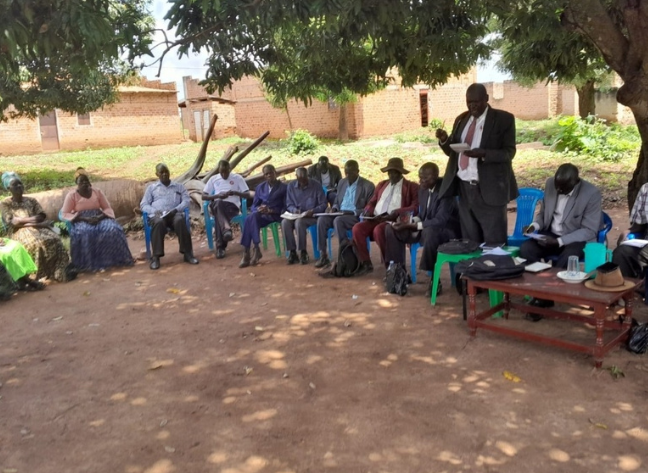

Kole, Uganda | Traditional leaders in Kole District have pledged to champion the government’s malaria vaccination campaign, promising to lead community-wide sensitization efforts aimed at dispelling myths and increasing public trust in the life-saving vaccine.
Meeting under the Kole Clan Leaders Association, 23 clan heads convened on Sunday at Kole Town Council Hall, where they resolved to use their grassroots networks to mobilize support for the newly introduced vaccine.
The move follows a recent sensitization workshop in Lira City organized by the Ministry of Health, where the leaders were briefed on the scientific and social value of the vaccine.
Following the meeting, Jacob Owani, chairperson of the association and chief of Ayer Odwakori Clan, noted that the training had underscored the pressing need for local leadership in public health.
He explained that since communities place trust in traditional leaders, it was now their responsibility to confront fear and misinformation surrounding the vaccine.
Despite the government’s rollout efforts, malaria vaccine uptake in Kole remains low, particularly among young mothers.
Health officials attribute this to persistent misinformation, cultural resistance, and conspiracy theories, often influenced by religious narratives.
Owani observed that some community members still believed the vaccine was part of a harmful agenda. He warned that such misconceptions endangered lives and undermined national efforts to improve child health.
The meeting also brought together youth representatives, women leaders, young mothers, and residents from neighbouring subcounties.
The leaders unanimously agreed to use monthly rotational clan meetings as platforms to raise awareness not only about malaria vaccination but also about broader development challenges such as poverty, hygiene, and nutrition.
Owani emphasized that the region could not continue to lag behind, adding that proactive leadership must begin at the grassroots.
Santos Odero, a Village Health Team (VHT) leader from Amuge Parish, confirmed that vaccine hesitancy was particularly high in areas like Alito Subcounty, where community awareness about the vaccine remained low.
He explained that many mothers were still reluctant to bring their children for vaccination due to a lack of proper sensitization.
George Ayere, LC1 chairperson of Tekworo B Village, where the meeting took place, pointed out that poor communication between government and citizens was impeding the successful implementation of critical health programmes.
He said that without regular engagement on the ground, even the most well-intentioned initiatives would struggle to achieve impact.
As Uganda’s national malaria vaccine campaign gathers momentum, traditional leaders in Kole are positioning themselves as trusted intermediaries between health authorities and local communities.
They hope their involvement will help change public attitudes, enabling more families to protect their children against one of the country’s most deadly diseases.
Malaria remains the leading cause of illness and death among children under five in Uganda.
The introduction of the RTS,S vaccine, the first malaria vaccine recommended by the World Health Organization (WHO), is expected to significantly reduce child mortality if uptake increases.