
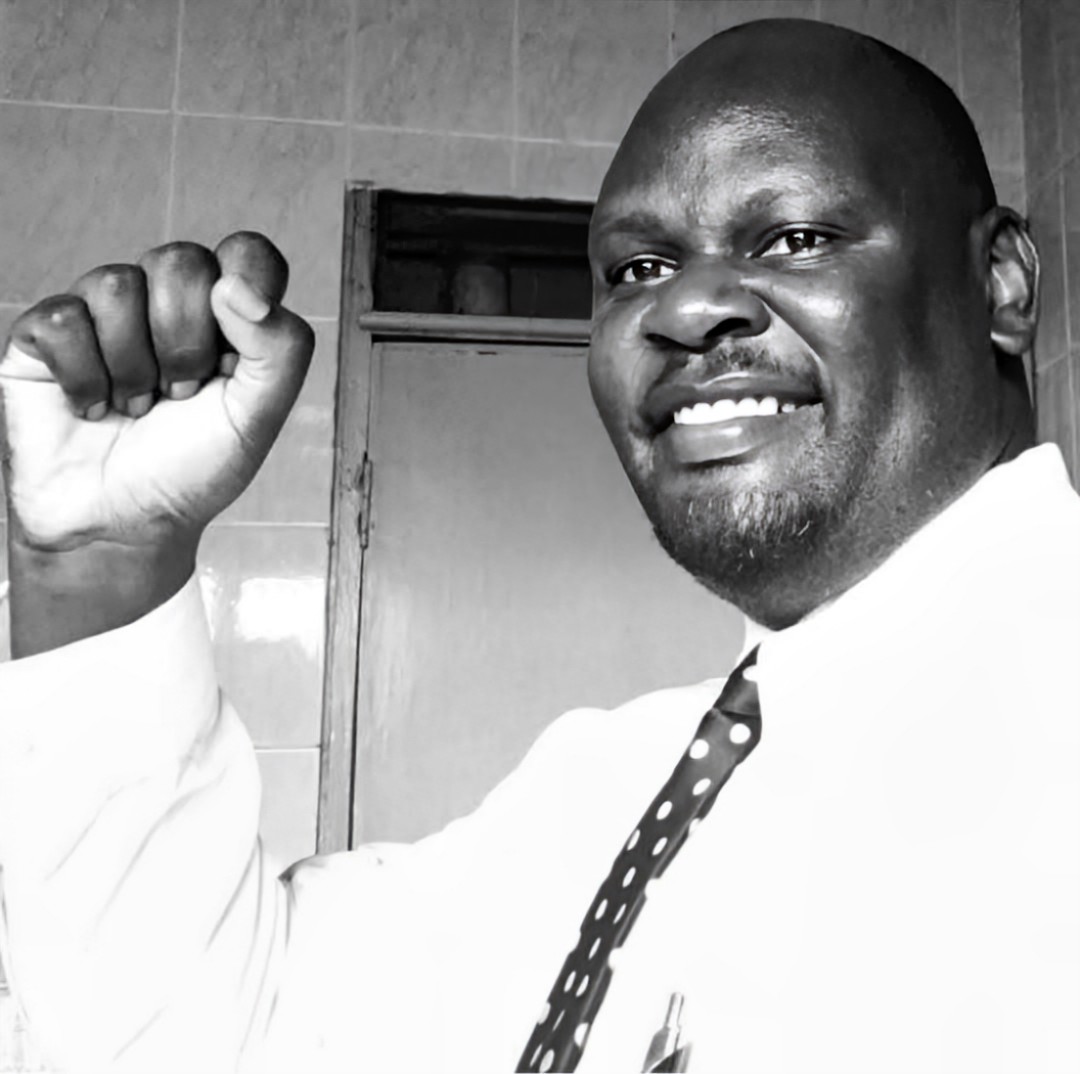

By Dr. Bob Marley Achura
Community Driven Development Advocate
There’s a story I can’t get out of my mind.
It was a humid evening in Ayabi Parish, Kwania District, in Uganda. I had stopped by a small homestead to check on Atim Margaret, a young mother I had met during a village health outreach some months back. She greeted me with a quiet smile and disappeared into her mud hut, only to emerge moments later holding her two-year-old son, Denis, full cheeks, bright eyes, and very much alive.
“Last time you were here, I didn’t know if he would make it,” she said softly.
She told me how, just weeks after our first meeting, Denis had fallen gravely ill with malaria. But unlike many mothers I’ve met over the years, she didn’t hesitate.
She didn’t have to. She was a member of her local community health insurance scheme and she knew she could walk into Aduku Nursing home and receive care without begging, borrowing, or selling the family’s only goat. And that’s exactly what she did.
Now Denis is chasing chickens in their compound.
Not far from Margaret’s village, in Aculbanya Subcounty, Kole District, a similar story had a very different ending.
Akello Jennifer, also a mother, lost her baby girl to pneumonia not because there wasn’t a health facility nearby, but because she didn’t have 20,000 shillings for transport and treatment. She waited. Prayed. Hoped. And when she finally got the help she needed, it was too late.
These are not just stories. They are the brutal, beautiful truths of life in rural Uganda.
The Health Insurance That Never Comes!
For more than two decades now, we’ve heard talk of a national health insurance scheme. I remember hearing about it when I was much younger, and I still hear about it today. It has become a ghost of policy always mentioned, never seen. The idea, in theory, is noble: to ensure that every Ugandan can access healthcare without risking financial ruin. But what have we actually seen?
- Over 80% of Ugandans still pay for healthcare out-of-pocket.
- Women continue to die in childbirth at a rate of 336 per 100,000 live births.
- Children die from malaria, pneumonia, and diarrhea illnesses we know how to treat.
- People with disabilities are still treated as afterthoughts in our national health strategy.
Let me be clear: this is not just a policy delay. It is a systemic failure. It is a broken promise. And it is costing lives every single day.
But Here’s the Thing: Communities Aren’t Waiting Anymore:
In places like Kwania, Apac, Oyam, Gulu, and Pader, ordinary Ugandans are refusing to wait for help that never arrives.
Back in 2015, through the efforts of local leaders, health workers, and partners like the Global Health Network (U), communities began building something remarkable, community-based health insurance (CBHI).
It started with village savings groups and farmer cooperatives pooling small monthly contributions into local health funds. Some paid in cash. Others contributed in kind — maize, beans, a chicken here or there. It may sound humble, but it worked.
Fast forward to today, and these community health funds now cover tens of thousands of people. Real people. Real lives. Real health.
In Gulu District, the local Community Health Assurance Scheme (GCHAS) now serves over 35,000 individuals. I’ve walked through the wards of Gulu Independent Hospital and spoken with mothers who used to fear entering those gates now they walk in with confidence, insurance cards in hand.
Take Lanyero Rose, a single mother of three from Pece-Laroo. A few years ago, she sold her only cow to pay for a C-section. “I had nothing left except my baby,” she told me. Today, she’s covered under GCHAS. No more begging. No more debt. Just dignity.
In Pader District, maternal care visits have gone up over 40% since they began a similar community fund. Women who used to deliver at home or not at all are now showing up to health facilities, trusting that they won’t be turned away.
And in Alebtong, families contribute millet and labour to keep their local scheme afloat. Some might laugh at that but let them laugh.
These schemes are saving lives while we wait for the suits in Kampala to figure out whether healthcare is a right or a reward.
A Hard Truth: If Communities Can Do It, Then What’s the Government’s Excuse?
Let’s not dance around it. If poor, remote communities with no fancy software, no state budget, and no policy think tanks can design and run functional, sustainable health insurance schemes… then it is shameful, truly shameful, that our government has not delivered a national health insurance program in over 20 years.
We have a full Ministry of Health. A Parliament. A President. Development partners. But we still leave millions of our citizens to face health emergencies with nothing but hope and prayer.
This isn’t about capacity. It’s about priorities.
A New Path Forward: District-Based Health Insurance as a Scalable Health Financing Model
It may sound radical but it is entirely rational, pragmatic, and overdue: What if Uganda stopped waiting on national government inertia and instead empowered districts to lead the way in health financing reform?
Uganda’s decentralized governance structure was not merely designed for political representation it was intended to bring essential services closer to the people, strengthen local accountability, and foster innovation at subnational levels.
District governments already oversee primary health service delivery, community mobilization, and public health programming.
Building on this foundation, districts can establish District-Based Health Insurance Schemes (DBHIS) locally administered, community-owned mechanisms modelled on the proven successes of Community-Based Health Insurance (CBHI).
Under such schemes, residents would contribute small, regular premiums either in cash or in kind, depending on the local economic context into a pooled fund.
The fund would be professionally managed by an autonomous unit established within the local government: the District Health Insurance Fund Authority (DHIFA).
This entity would function with the efficiency and transparency of a corporate social enterprise, governed by a multi-stakeholder board including local government, civil society, health workers, and community representatives. Its role would include:
- Contracting accredited health service providers (public and private-not-for-profit)
- Managing claims and reimbursements
- Monitoring quality of care
- Publishing audited financials
- Ensuring accountability to both contributors and service users
This model already exists in principle. Take Anyara Health Support Scheme in Kaberamaido District, where a community-managed health fund supported by the sub-county administration helped cut maternal deaths by 50% in just three years.
The scheme integrated contributions from households, savings groups, and local traders, and partnered with health centers to guarantee emergency obstetric care.
These are evidence-based, context-appropriate, scalable innovations not donor-driven experiments. They prove that effective local health financing mechanisms can be built and sustained in rural, low-income settings.
What Uganda needs now is political courage to institutionalize these models at the district level, rather than stalling national legislation indefinitely.
By creating a legal and policy framework for DBHIS under the Local Government Act or the Public Health Act, the Ministry of Local Government and Ministry of Health could support scale-up without waiting for national health insurance legislation to pass.
This would not just be a policy reform it would be a social contract. A declaration that communities will no longer remain passive recipients of health aid, but active architects of their own health futures.
It would send a clear, collective message to the national leadership: we are done waiting. If you won’t act, we will.
And perhaps just perhaps, once Parliament and the Executive witness the tangible health and economic benefits of district-led insurance models, they will finally be compelled to enact the national scheme that Ugandans have long been promised.
The time for pilot projects is over. The time for community-led health financing is now.
This Is About More Than Healthcare – It’s About Who We Are:
I’ve spent over 20 years walking dusty roads, sitting under mango trees with community health workers, holding the hands of mothers and burying too many children who didn’t have to die.
And still, I believe in this country.
I believe in the power of communities to rise above their circumstances. I’ve seen it. I’ve felt it. I’ve lived it. And I’ve watched communities, time and again, do what entire institutions have failed to do: protect life.
The question now is simple: will we listen?
Let’s Build Health From the Ground Up:
Let the story of Margaret and her son Denis be more than just one of survival. Let it be the seed of a national awakening.
Let the health schemes of Gulu, Apac, and Alebtong remind us what’s possible when people stop waiting and start building.
And let every district chairperson, every LC5, every health officer across this country ask themselves one question:
If my community can build their own health insurance, what’s stopping me from leading the way?
The future of Uganda’s health system isn’t in a bill gathering dust in Parliament. It’s in the people. In their resilience. In their hands.
And we have everything we need to build it.
From the ground up.