

When the wind came to Kasodo, it did not ask.
It tore through Kasodo Sub-county in Pallisa District, flattening huts, soaking blankets, scattering saucepans across gardens, and leaving more than 50 families with nowhere to sleep.
or days after, life has been lived in the open. Mothers cook under trees. Children sleep in the cold, wrapped in whatever cloth was salvaged. Jerrycans, plates, books, beddings all gone with the wind.
Then hope returned. And it returned twice.
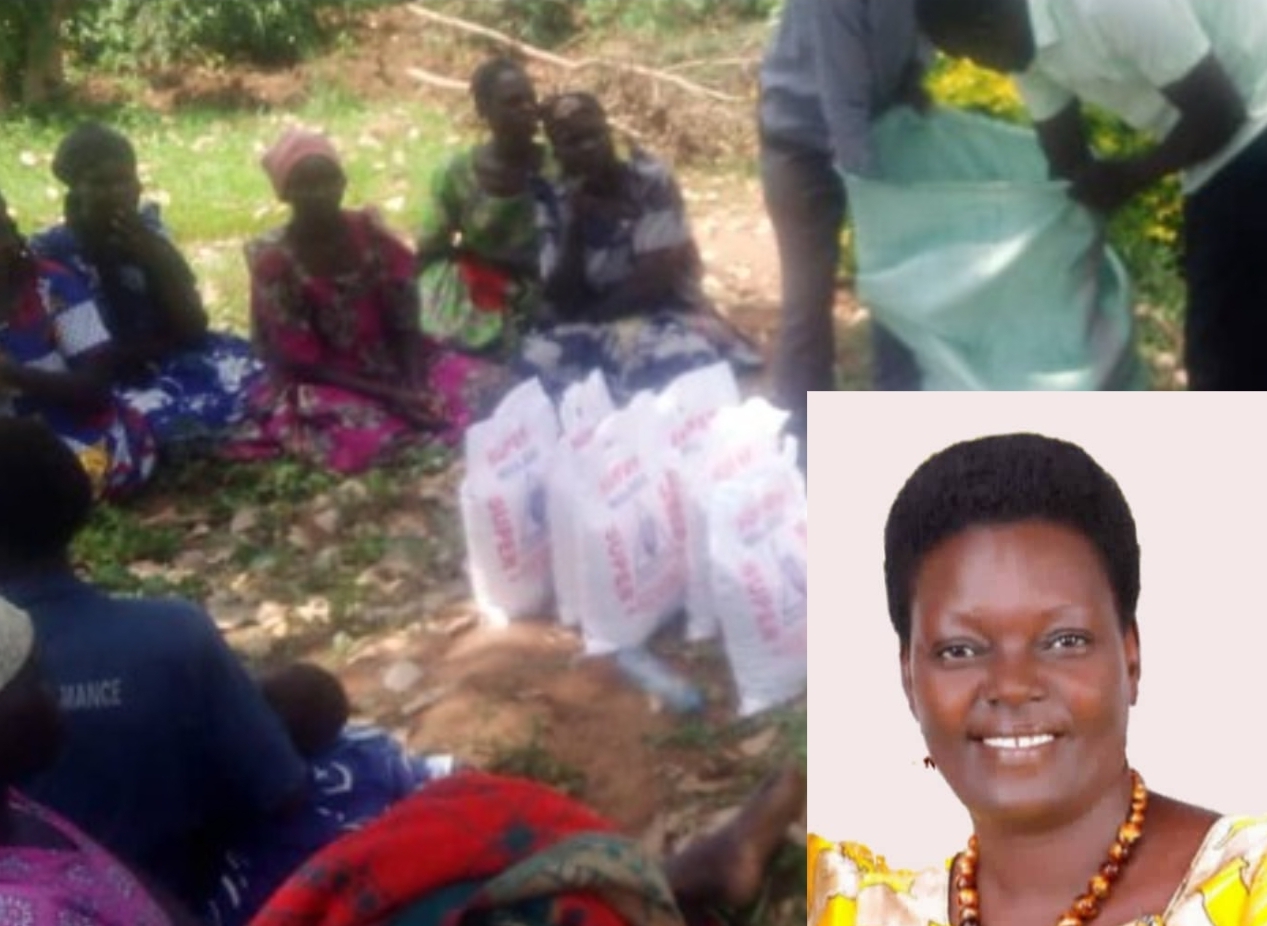
Hon. Catherine Achola, the Woman Member of Parliament for Pallisa District, first arrived when hunger was biting hardest. She came with posho for every affected household — to make sure no family went to bed hungry in the ruins of their homes.
Most leaders would have stopped there.
But she did not.barely few days later, Achola was back, walking the same dusty, broken paths of Kasodo, her vehicle loaded again — this time with food, warm blankets and jerrycans for families still struggling to find their footing.
The distribution was emotional. More than 50 households received the items, some breaking into tears as they held new blankets in their hands.
“When she came the first time, we thought it was over. But she remembered us. She has come back with blankets for our children who have been sleeping in the cold,” said one mother, clutching her bundle tightly.
In Kasodo, that second visit meant more than relief. It meant dignity. A blanket means a child will not shiver tonight. A jerrycan means a mother can fetch clean water again. Food means a family can sit together and eat after days of uncertainty.
“Our people lost their homes, their food, their belongings. You cannot leave them alone at such a time. I came back because their pain is still there, and we must stand with them until they recover,” Achola said.
But this is not the first time Achola has run to her people when the skies turned dark.
In May this year, when a deadly hailstorm swept through Kibale Town Council, killing two children and leaving over 1,000 residents homeless, it was the same Achola who first responded.
When Omukulai and Opogono parishes were battered, with roofs blown off, walls demolished, crops destroyed and animals killed, Achola moved in with emergency relief while many were still counting losses.
She delivered food and essential supplies to stranded families, stood with bereaved households that had lost children, and pushed for government attention at a time when the district was overwhelmed.
That intervention in Kibale is still remembered today, and it is the reason residents say her return to Kasodo is not a surprise irat is her character.
Yet the scars of May have not healed in Kibale.
Lambert Okurut, former New Vision reporter and proprietor of Re. Kajas Okurut Primary School, is still staring at a Shs50 million bill to rehabilitate a four-classroom block whose roof was ripped off, along with furniture and books destroyed.
“I pray the Office of the Prime Minister through its Ministry of Disaster Preparedness comes to our rescue. I beg government to consider my situation like it did for Roko one time because all the resources I had I invested in this school,” he said.
Nearby, Angela Berita Asige, a widow with four children, lost her retail shop — her only source of livelihood — to floodwaters.
“I had gone for a burial in Mukongoro Town Council in Kumi District, only to be called that my children are badly injured as the wall fell on them,” she narrated.
Emmanuel Tukei has since shifted to stay with his in-laws after three of his huts were blown off, and finding grass for thatching has become almost impossible.
John Okia, himself a victim, recalled that since the death of Dr. Stephen Mallinga in 2013, the Ministry of Disaster Preparedness has rarely responded, even when famine hit the area.
The Assistant RDC Louis Patrick Okia thanked Achola for her continued intervention in such calamities. And in the midst of it all, one voice stood out that of Padere Kikonkolo, seasoned politician and cultural leader of the Bagwere, who lauded Achola’s consistency from Kibale in May to Kasodo now.
Kikonkolo urged all Pallisa leaders to stay connected to the Office of the Prime Minister so that government support can supplement their personal efforts instead of breaking them financially.
From Kibale in May to Kasodo today, the thread is the same. Roofs can be rebuilt. Walls can be raised again. But it is the act of returning of remembering people after the cameras are gone that keeps hope alive.
For Pallisa, MP Achola has proved twice that when storms tear homes apart, leadership can still bring hope back.