
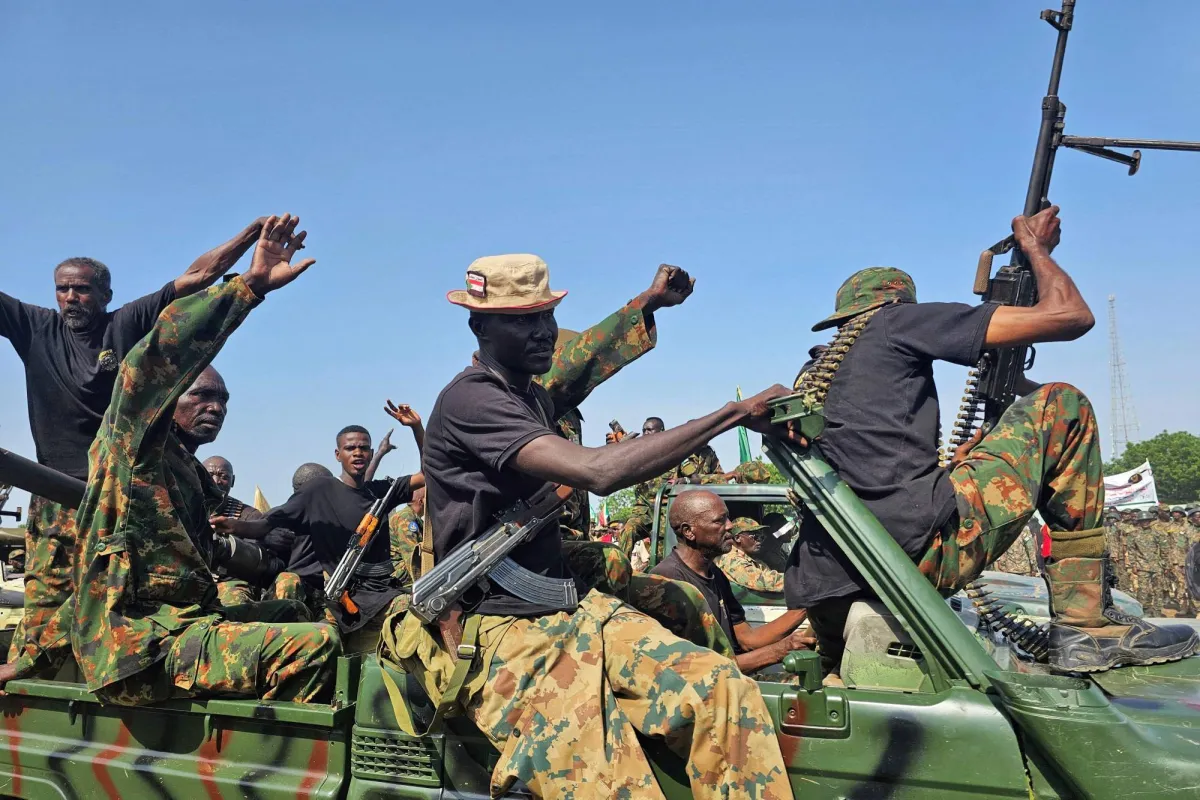

Countries across the Horn of Africa are facing growing security concerns amid allegations of cross-border recruitment of fighters from Ethiopia’s Tigray region to support Sudan’s military in its ongoing war, raising fears of a wider regional conflict.
The allegations, made by Sudan’s opposition Umma Party, point to the possible involvement of Islamist figures allied to Sudanese army chief Abdel Fattah al-Burhan and Eritrea in the recruitment of young men from Tigray.
The party claims the recruitment is intended to support military operations against the government of Ethiopian Prime Minister Abiy Ahmed, potentially opening another military front along Sudan’s eastern border.
The accusations have renewed concerns about the growing links between armed groups and political actors across national borders, particularly as Sudan continues to grapple with a devastating war that began on April 15, 2023.
Sudanese media reports indicate that between 20,000 and 30,000 fighters affiliated with the Tigray People’s Liberation Front (TPLF) entered Sudan following the outbreak of the Ethiopian conflict, which lasted from 2020 to 2022 and ended with the Pretoria Peace Agreement.
Ethiopia reportedly asked Sudanese authorities to return the fighters, but the Sudanese army leadership was slow to fulfil its commitments. According to the Umma Party, some of the fighters later appeared in military operations alongside Sudanese army forces in Khartoum, Al Jazirah and Blue Nile states.
The allegations also draw attention to the Al-Baraa ibn Malik Brigades, an Islamist armed group allied to the Sudanese army and subject to United States sanctions.
The developments come as analysts warn that conflicts in the Horn of Africa are increasingly interconnected, with armed groups, external interests and cross-border financial and military networks making regional security more difficult to manage.
An analysis published by African Arguments describes the situation as a shift from conventional state-centred conflicts to interconnected war economies in which fighting can continue through networks of armed actors and external support, even where state institutions are weakened.
The analysis identifies arms and financial flows involving Middle Eastern countries, including Saudi Arabia, Qatar and Türkiye, as contributing factors in the emergence of proxy conflicts along old and new regional fault lines.
It further warns that the distinction between domestic and external conflicts, as well as state and non-state actors, is becoming increasingly blurred, making traditional peace negotiations more difficult.
Beyond the security implications, Sudan is facing enormous economic losses from the conflict.
Sudanese political economist and researcher Omar Sayed Ahmed, writing in New Horizon magazine, estimates that the war had cost the country approximately $145.7b by the end of June.
The assessment, based on the Damage, Loss and Needs Assessment methodology adopted by the World Bank and the United Nations, puts the cost of recovery and reconstruction at approximately $159b over 10 years.
Ahmed says the economic damage is equivalent to more than four times Sudan’s pre-war gross domestic product, reflecting the destruction of infrastructure, public institutions and productive sectors.
The African Arguments analysis warns that the growing entrenchment of cross-border war economies is making conflicts increasingly resistant to containment and harder to resolve through conventional political settlements.
However, the allegations surrounding the recruitment of Tigrayan fighters and the reported involvement of Eritrea and Sudanese Islamist figures have not been independently established in the source material.
Attempts to obtain comments from Sudanese army leaders and Eritrean authorities regarding the allegations had not yielded a response by the time of publication.