
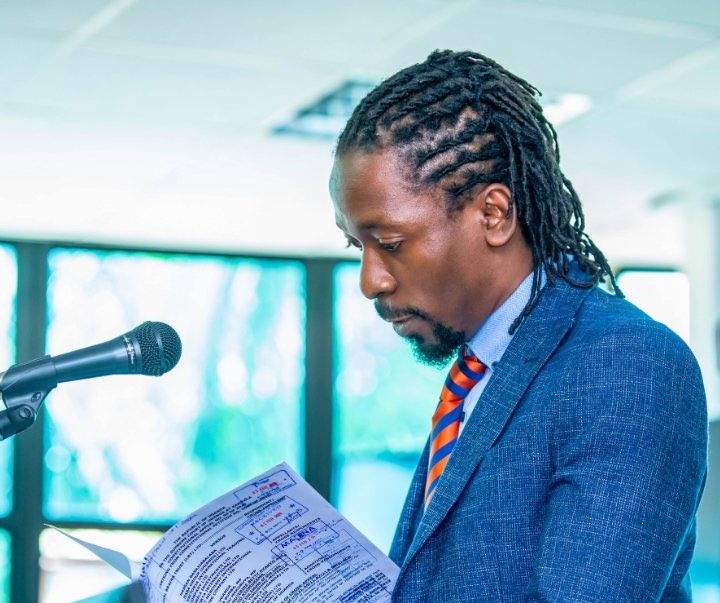

Kampala, Uganda | The President of the Uganda Law Society (ULS), Isaac Ssemakadde, has declined an appointment to the Judiciary’s Law Reform Committee, citing concerns over judicial accountability, the state of the justice sector, and ongoing tensions between the Bar and the Bench.
In a letter dated June 17, 2025, addressed to Chief Justice Alfonse Owiny-Dollo, Ssemakadde acknowledged receipt of the appointment instrument but rejected the offer, accusing the Chief Justice of fostering an environment hostile to constructive engagement and criticism.
Ssemakadde noted that the Judiciary, as a public institution, should uphold freedom of expression and accommodate public criticism, including of judicial officers.
He referenced a 2006 Constitutional Court decision in Andrew Mwenda & EAMI v Attorney General, which emphasized that judicial officers should be open to scrutiny as part of democratic accountability.
The letter criticised the Chief Justice’s response to a January 2025 request by the Radical New Bar (RNB) Governing Council of ULS for a consultative meeting on judicial issues.
Ssemakadde described the Judiciary’s actions during the Opening of the New Law Year in February including removing him from the programme and declaring the Bar unwelcome as oppressive and counterproductive to reform.
Citing systemic inefficiencies in the Judiciary, Ssemakadde pointed to the ongoing strike by ULS advocates in Masaka, where one judge and registrar are handling a backlog of over 4,000 cases for a population of more than two million.
He stated that Masaka was not unique, and that courts across the country are grappling with similar shortages in manpower.
He also referred to what he termed the “qualitative inadequacy” of some judicial officers, highlighting Executive Order RNB No. 3 of 2024, which called for a boycott of High Court Judge Musa Ssekaana over alleged judicial misconduct.
Ssemakadde cited the recent Court of Appeal ruling in Kiwanuka v Kiwanuka, which faulted Judge Ssekaana for violating procedural fairness and constitutional principles.
He questioned why the Chief Justice had not called for an apology from the judge in question.
Ssemakadde further argued that his ongoing legal dispute with Judge Ssekaana specifically, a contempt of court order issued on February 14, 2025, over comments made on social media renders him unable to serve on the committee.
He described the order as unlawful and still pending expungement, saying it had effectively forced him into exile.
He recommended that the Law Reform Committee prioritise the review of contempt of court laws, particularly the offence of “scandalizing the judiciary,” which he called an outdated colonial law that unjustly curtails freedom of expression.
He cited international principles, including the UN Basic Principles on the Independence of the Judiciary and the Commonwealth Latimer House Principles, in support of his position.
According to the 2021 “Cost of Corruption” report by the Inspectorate of Government, court users paid over UGX 763 billion in bribes to navigate systemic challenges, a figure Ssemakadde argued reflects a justice system in crisis.
As a way forward, Ssemakadde reaffirmed his earlier decision to delegate representation of ULS in all Judiciary committees to ULS Vice President Anthony Asiimwe.
He recommended that Asiimwe be appointed to the Law Reform Committee in his place.
The Judiciary has not yet publicly responded to the letter.