

Gulu, Uganda | Northern Uganda is preparing for the largest livestock relocation in recent years as the Uganda People’s Defence Forces (UPDF) prepares to implement Operation Harmony, a 65-day mission aimed at removing unregulated cattle and restoring peace on communal lands.

At the centre of the operation is the enforcement of Presidential Executive Order No. 3 of 2025, which restricts the movement of cattle into northern districts without veterinary clearance and targets the widespread occupation of land by herders, commonly referred to as the Balaalo.
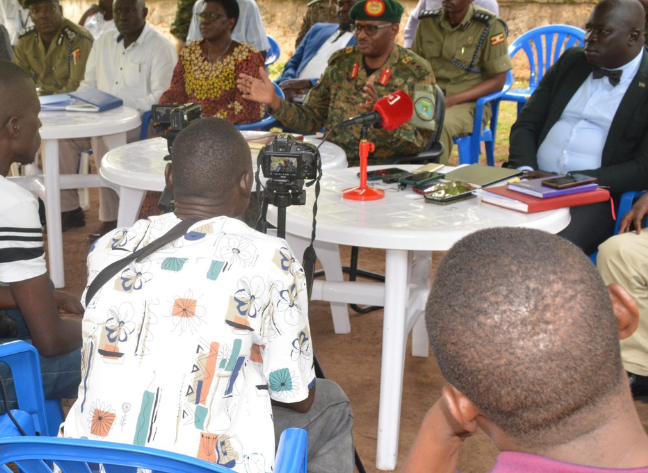
During a high-level briefing at the 4 Infantry Division Headquarters in Gulu, Division Commander Maj Gen Felix Busizoori confirmed that the operation would commence on 25 June 2025, targeting key hotspot districts affected by illegal grazing, land conflicts, and blocked water access points.
He clarified that the goal of the operation was not to evict individuals but to remove cattle that were illegally brought into the region.
He emphasized that no livestock would be permitted to cross Karuma Bridge without valid documentation approved by District Veterinary Officers (DVOs).
The operation will unfold in three distinct phases:
1. Mobilisation and Sensitisation – including logistical preparation and educating communities on the purpose and procedures of the exercise.
2. Voluntary Exit Phase – allowing herders to relocate their livestock peacefully.
3. Enforced Eviction – a legal and security-led process to deal with non-compliance.
Maj Gen Busizoori said the operation would be closely monitored from an Operation Data Centre established in Gulu to ensure efficiency and transparency.
Committees comprising representatives from security forces, legal institutions, and cultural leaders have been created to verify land ownership and rental agreements.
He noted that cattle found to be abandoned or without proper documentation would be auctioned through a lawful process under the supervision of DVOs.
He warned that political leaders would not be allowed to accompany field teams, stressing that this measure was designed to keep the operation free from bias and manipulation.
Field officers, he said, were expected to maintain professionalism and avoid emotional responses.
He further stated that anyone attempting to incite violence, interfere with the process or sabotage the operation would be arrested and prosecuted.
The division commander appealed to the public and the media to support the initiative by avoiding the spread of false or sensational information.
He encouraged all stakeholders to work closely with the operation teams under the leadership of the DVOs and to ensure the exercise proceeds lawfully and fairly.
Amuru Resident District Commissioner, Mr Osborne Ocen, urged political leaders and community members to support the operation and allow trained personnel to execute it without obstruction.
He said that ensuring adherence to the correct procedures would strengthen the success of the mission.
Representing the Inspector General of Police, Commissioner of Police Acaye cautioned the public against any criminal activities during the operation.
He assured the population that enforcement would be conducted with fairness but warned that lawbreakers would face appropriate action.
The operation is expected to reach hundreds of parishes, targeting the removal of 150 to 500 cattle per parish.
Legal officers and cultural leaders will accompany field teams to ensure that the rights of both host communities and affected herders are protected.
Authorities said the exercise responds to growing concerns from local residents over the destruction of crops, violent land disputes, and interference with traditional water points caused by unregulated cattle grazing.
The launch of Operation Harmony marks a decisive step by the government to address longstanding grievances over land use and illegal grazing.
With security forces, veterinary officers, legal experts, and community leaders all involved, the initiative is expected to reshape the region’s approach to land management and reduce tensions between host communities and non-compliant cattle herders.