

By Opio Anthony, MLA
Diabetes is no longer a distant medical condition confined to hospitals and textbooks, It has become a fast-growing public health emergency quietly affecting Ugandan families, communities, and the national economy.
Yet despite its rising toll, diabetes remains dangerously misunderstood, underdiagnosed, and largely ignored.
Uganda today faces a dual burden of Type 1 and Type 2 diabetes, both of which are increasing at alarming rates.
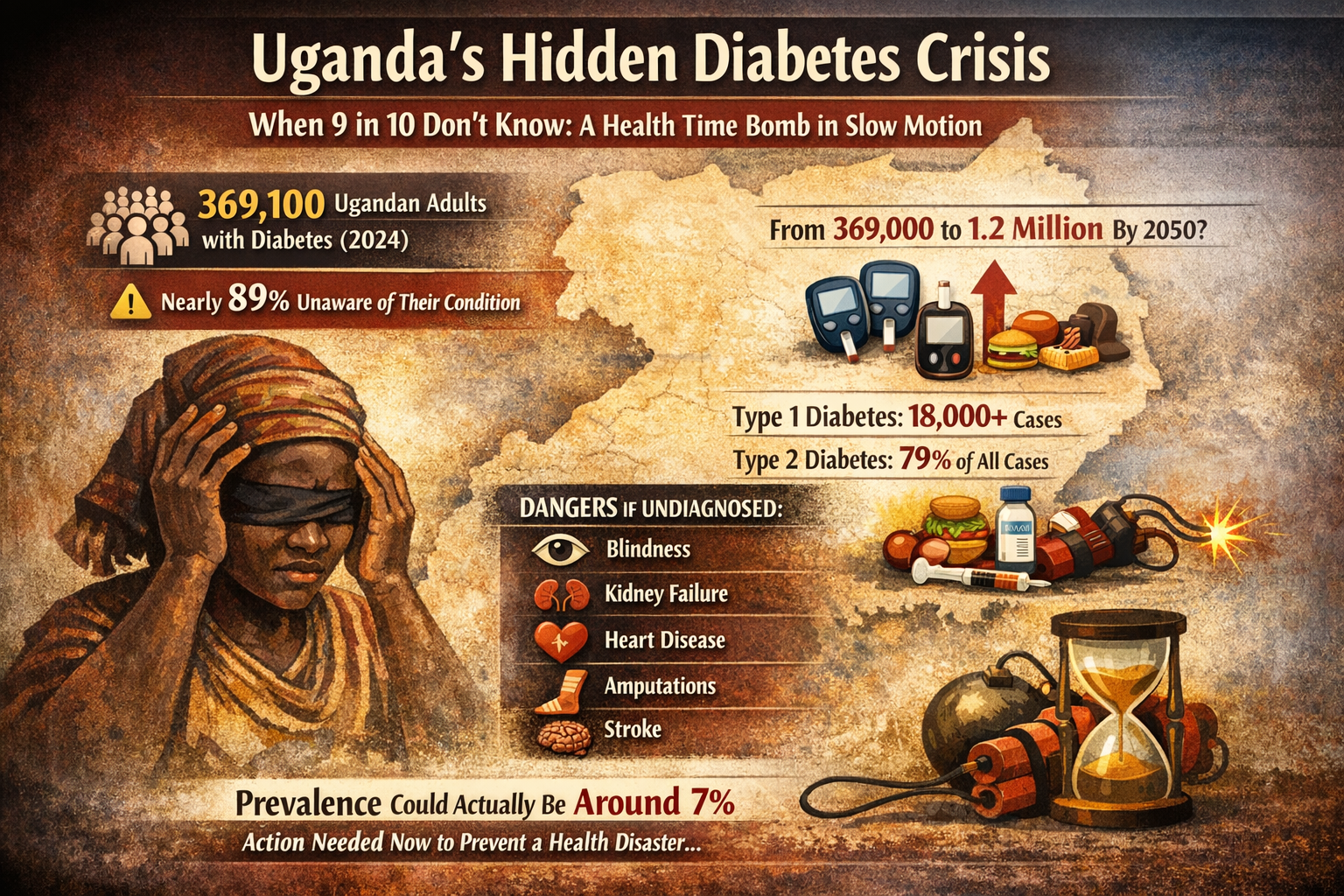
As of 2024/2025, an estimated 369,100 adults in Uganda are living with diabetes, representing 2.2 per cent of the adult population of about 22 million.
However, emerging studies suggest the true prevalence could be as high as 7 per cent, meaning hundreds of thousands of Ugandans may be living with the disease unknowingly.
If current trends continue, diabetes cases could reach nearly 1.2 million by 2050, placing immense strain on an already overstretched health system.
Type 1 diabetes is an autoimmune condition that often begins in childhood or adolescence. It occurs when the body destroys its own insulin-producing cells.
People living with Type 1 diabetes require daily insulin to survive.
In Uganda, about 18,191 people of all ages live with this condition, many facing challenges of affordability and access to insulin and diagnostic supplies.
Type 2 diabetes, which accounts for about 79 percent of cases in some regions, is largely driven by lifestyle and environmental factors.
Rapid urbanisation, unhealthy diets, physical inactivity, obesity, excessive alcohol consumption, and genetic predisposition have fuelled its rise.
A 2019 estimate suggested more than 1.6 million Type 2 diabetes cases, diagnosed and undiagnosed combined, with prevalence growing at 4.9 per cent annually.
The most dangerous aspect of diabetes in Uganda is not just its prevalence but its silence.
Research indicates that up to 89 per cent of people with diabetes are unaware they have the condition.
Many only discover it after serious complications occur, blindness, kidney failure, nerve damage, heart disease, stroke, or limb amputations.
At that stage, treatment becomes costly, complex, and often inaccessible.
Regional disparities further complicate the picture, while some studies show higher prevalence in the central region, rural communities are increasingly affected.
Changing diets, reduced physical activity, and limited access to screening services mean diabetes is no longer an urban problem, it is spreading rapidly across villages and trading centres.
Misinformation continues to worsen the crisis, persistent myths linking diabetes to witchcraft, curses, or sugar intake alone have delayed care for countless patients.
Others believe herbal remedies can cure diabetes entirely.
The reality is stark: diabetes has no cure, but it can be effectively managed.
Early diagnosis, proper medication, healthy eating, regular physical activity, and routine monitoring can enable people with diabetes to live long and productive lives.
Uganda must now respond with urgency, public awareness campaigns are needed to demystify diabetes and promote routine screening, especially among adults over 30 and those with a family history of the disease.
Health facilities must be strengthened to ensure early diagnosis and continuous care.
Equally critical is access to essential medicines, insulin, and blood-glucose testing supplies should not be luxuries.
For children and young people with Type 1 diabetes, uninterrupted access to insulin is a matter of life and death.
Prevention must also take centre stage, promoting healthier diets, reducing sugar and alcohol consumption, and encouraging regular physical activity are not optional lifestyle choices; they are national public health priorities.
Diabetes is not just a medical issue, it is a development challenge.
If left unaddressed, it will erode household incomes, increase health-care costs, and undermine national productivity.
The silent diabetes epidemic is already among us, the cost of inaction will be far greater than the cost of acting now.