

By Woo Chris
Omoro, Uganda | Alarming new statistics have revealed that 64% of married women in the Acholi Sub-Region have suffered sexual abuse, painting a grim picture of gender-based violence (GBV) in Northern Uganda.
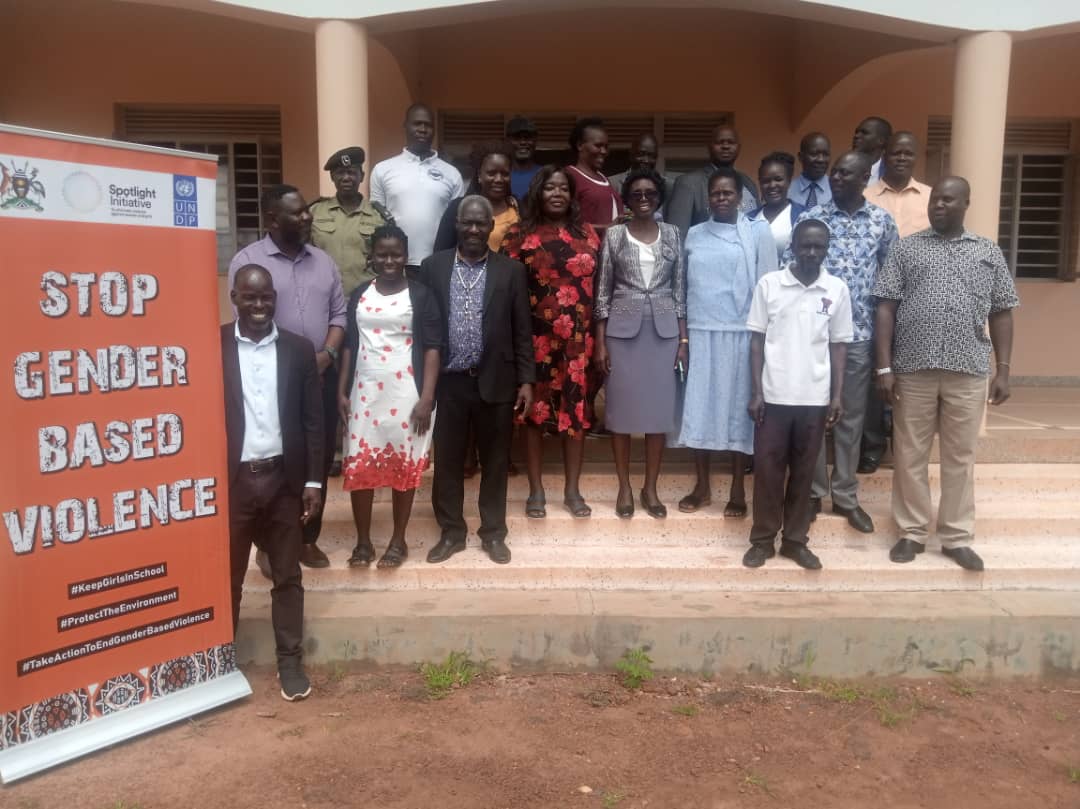
The data was disclosed during a community dialogue organized by the Ministry of Gender, Labour and Social Development in Omoro District.
The engagement focused on tackling GBV and promoting sexual and reproductive health rights.
Akumu Christine Okot, an official from the ministry, said the lack of funding at the local government level continues to undermine efforts to eliminate GBV and teenage pregnancies.
She urged parents and stakeholders to embrace parental involvement and community action to combat the vice, noting that the absence of adequate resources at the local level has fueled the persistence of the problem.
The discussion also highlighted Omoro District’s 28% teenage pregnancy rate, which has been linked to increasing school dropouts and early marriages.
The dialogue forms part of the EU-UN Spotlight Initiative, a global campaign aimed at ending all forms of violence against women and girls.
Following the success of its first phase, Uganda has launched Spotlight 2.0, supported by UNFPA and UNDP under the coordination of the UN Resident Coordinator’s Office.
The program aligns with Uganda’s fourth National Development Plan and contributes to several Sustainable Development Goals (SDGs), including SDG 1 (No Poverty), SDG 3 (Good Health and Well-being), and SDG 5 (Gender Equality).
Susan Loum, the Principal Assistant Secretary representing the Chief Administrative Officer of Omoro District, pledged that the district will prioritize GBV-related budgeting going forward.
She said people are dying because of GBV-related issues and stressed the need for immediate action.
Patrick Komakech, the Assistant Resident District Commissioner, urged the Ministry and partners to extend similar engagements to the grassroots, citing the vastness of Omoro District and the widespread nature of child-related violence.
Stakeholders concluded the dialogue by committing to strengthen collaboration across government, civil society, and community structures to ensure sustained action against GBV and teenage pregnancies, with the aim of creating safer and more equitable communities throughout the Acholi Sub-Region.