
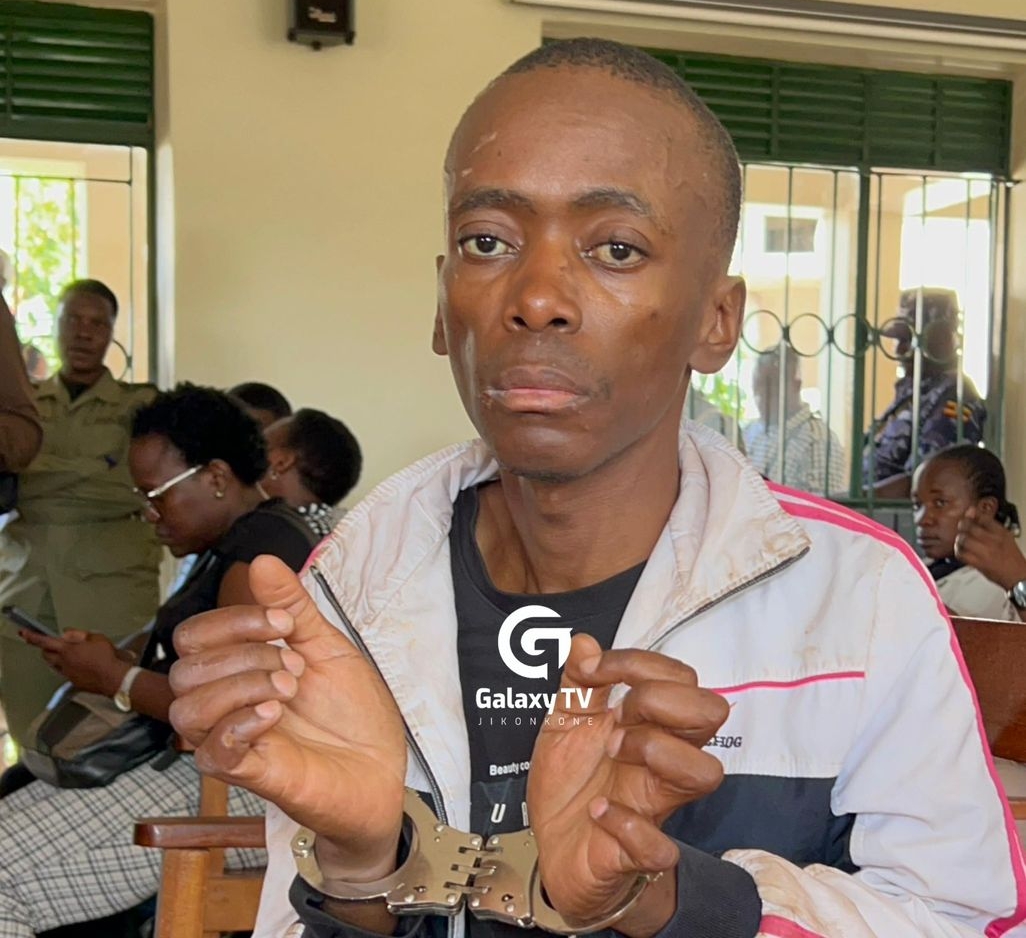

Kampala, Uganda | The High Court has sentenced Okello Christopher Onyum to death for the murder of four children at Ggaba Daycare Centre, concluding a closely followed trial that drew widespread public attention.
Presiding over the session, Lady Justice Alice Komuhangi delivered the verdict after finding that the prosecution had proved its case beyond reasonable doubt.
The conviction followed months of proceedings in which both the State and the defence presented their cases.
Court heard that the charges arose from the killing of four minors at Ggaba Daycare Centre, an incident that sparked national concern over child safety.
During the trial, the prosecution relied on witness testimonies, forensic findings and investigative reports, which it said placed the accused at the scene and pointed to premeditation.
State Attorneys argued that the nature of the killings, the vulnerability of the victims and the circumstances under which the offence was committed warranted the maximum penalty.
The defence team challenged the prosecution’s case, questioning the strength and consistency of the evidence and arguing that it was insufficient to sustain a conviction beyond reasonable doubt.
Defence lawyers also raised issues relating to motive and urged court to consider mitigating factors during sentencing.
In her ruling, Justice Komuhangi noted that the minimum sentence for each count is 35 years’ imprisonment, while the maximum is death, depending on the circumstances of the case.
She cited Paragraph 17 of the Sentencing Guidelines, which allows courts to impose the death penalty where a life sentence is deemed insufficient, particularly in cases considered the “rarest of the rare.”
The prosecution urged court to apply this principle, arguing that leniency in similar cases had contributed to rising violent crime.
The defence, however, maintained that the court should consider a lesser sentence, taking into account the mitigating factors presented.
Justice Komuhangi described the killings as “brutal and heinous,” noting that they shocked the nation and devastated the victims’ families.
The court found that the accused “planned and meditated this offence meticulously,” targeting “defenceless children who entirely depended on adults for protection,” and carrying out the attack in a place considered safe.
The judge added that the circumstances demonstrated a high degree of intent and gravity.
While the convict denied allegations that the killings were linked to human sacrifice, the court found the explanation unconvincing based on the evidence on record.
The court also observed that the accused did not express remorse during the proceedings, a factor it considered in assessing both culpability and sentence.
Justice Komuhangi cited Article 22(1) of the Constitution of the Republic of Uganda, 1995, which protects the right to life but allows for deprivation of life in execution of a sentence imposed by a competent court following a fair trial.
Court accordingly sentenced Okello Christopher Onyum to death, the maximum penalty under Ugandan law for murder.
He was advised of his right to appeal and has 14 days within which to file an appeal to the Supreme Court if dissatisfied with the ruling.
The judgment attracted mixed reactions, with members of the public and families of the victims expressing strong emotions at the court premises.
The prosecution welcomed the decision as justice for the victims, while the defence indicated it would review the judgment before determining whether to pursue an appeal.