

By Alele Ronald
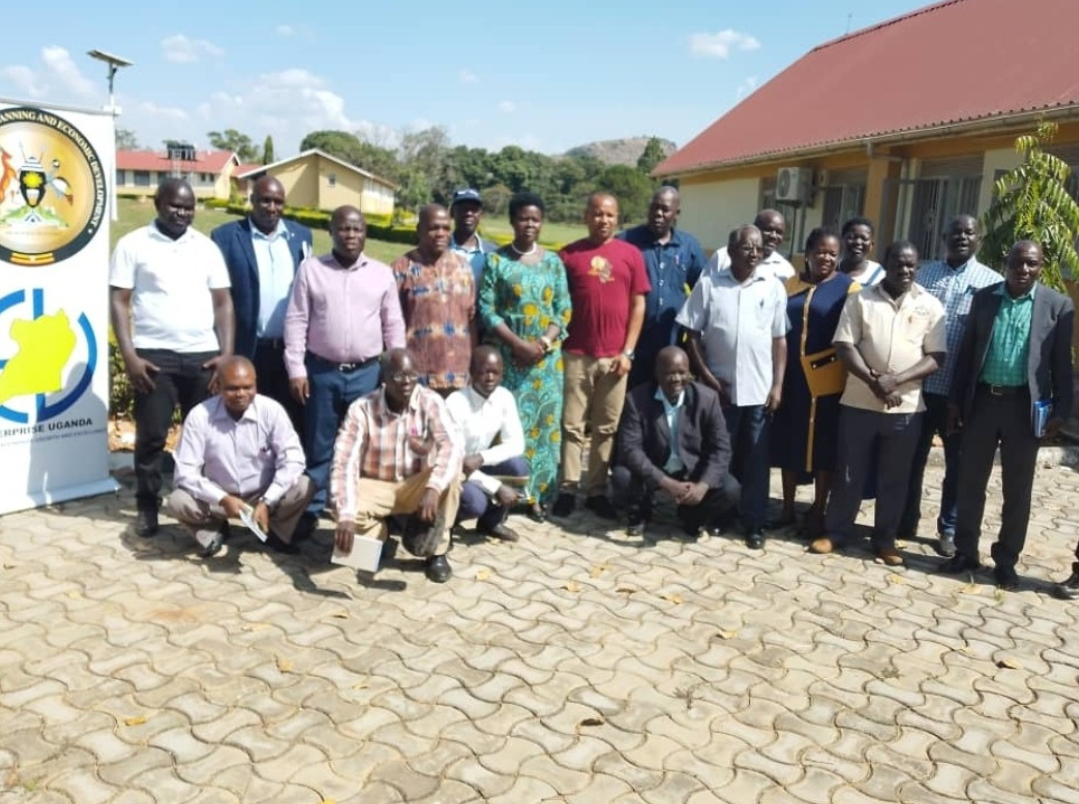
Lira City, Uganda — Key government officials and stakeholders on 18 December 2024 gathered at Ngetta Zonal Agricultural Research and Development Institute (ZARDI) to address challenges and highlight progress in the implementation of the Parish Development Model (PDM).
Speeches from Abang Beatrice Molly Kia, Deputy RDC for Lira District, and Robert Sendegeya, Head of Research and Policy at the PDM Secretariat, outlined the program’s achievements and areas for improvement.
In her speech, Abang Beatrice Molly Kia emphasized the need for collaboration among stakeholders to drive the success of the PDM.
She hailed the initiative as a testament to the visionary leadership of President Museveni, aimed at lifting 39% of Ugandans out of poverty.
“Let us generate strategies that actively involve everyone,” she said. “There is nothing for me without me.”
Kia highlighted the importance of balancing commercial farming with food security, urging communities to produce for both income and household consumption.
However, she didn’t shy away from addressing the challenges, particularly corruption and inefficiencies in the distribution of agricultural inputs.
She urged agricultural extension officers to ensure farmers receive quality seeds, stressing that accountability is essential for building trust.
Kia also shared insights from her monitoring efforts, noting success stories of parishes already generating surplus income but calling for better farmer education on bulking and value addition to improve market access.
Robert Sendigeya provided a national perspective, outlining the government’s significant financial commitment to the PDM.
He noted that each parish had already received over 200 million UGX, with an additional 100 million UGX allocated for the current financial year.
“The President’s vision is clear: produce for your stomach, but also sell and transform your household,” Sendigeya said.
He highlighted the need to strengthen the agricultural value chain, from input supply to market access. He stressed that production alone is not enough and urged stakeholders to help farmers adopt better practices and engage in commercial agriculture.
Sendegeya acknowledged issues such as mismanagement of resources but expressed optimism that ongoing reviews and stakeholder engagements would improve transparency and efficiency.
He also revealed plans to use feedback from the event to inform a Cabinet paper aimed at refining PDM implementation.
Both leaders called for collective action to address corruption, ensure timely access to resources, and educate farmers on sustainable practices.
They emphasized that the PDM is a transformative program that requires the active participation of all stakeholders to succeed.
The event underscored the government’s commitment to improving the livelihoods of Ugandans, with a clear focus on moving communities from subsistence to commercial farming for long-term socio-economic transformation.