
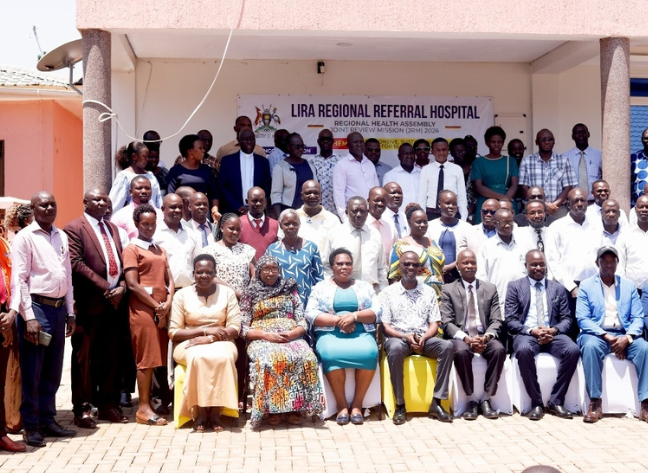

The government is set to procure 52 new ambulances in the 2026/27 financial year at a cost of Ugshs 20bn to strengthen emergency medical services and improve referral systems across the country. The fleet will comprise 50 Type B ambulances and two specialised Type C ambulances, Dr. Charles Akiya Oyoo, Commissioner for Non-Communicable Diseases at the Ministry of Health, said.
Speaking on behalf of the Director General of Health Services at the third Regional Health Assembly (Joint Review Mission 2026) organised by Lira Regional Referral Hospital at Gracious Palace Hotel in Lira City on Tuesday, Akiya said Uganda had 296 standard ambulances by June 2026, representing only 54% of the required fleet. He said the country still faces a deficit of 254 ambulances, a gap he said is affecting timely emergency referrals and access to critical care.

Akiya called for stronger collaboration between the government, development partners, and other stakeholders to bridge the ambulance gap and improve emergency response. He also urged health facilities in the Lango Sub-region to strengthen continuous quality improvement, citing prolonged patient waiting times, critical medicine stock-outs, inconsistent adherence to clinical guidelines, and weaknesses in infection prevention and control.
Lira Regional Referral Hospital Senior Executive Consultant Dr. Andrew Odur called for urgent, data-driven interventions to address the growing burden of sickle cell disease in the Lango Sub-region.

Odur said the prevalence of sickle cell disease in the region is estimated at between 20% and 25%, with the hospital’s sickle cell clinic alone receiving about 1,600 children and young people every week. He proposed documenting the clan backgrounds of patients to establish possible patterns and generate evidence that could guide targeted interventions.
Odur urged health leaders to shift from a predominantly curative approach to prevention, citing the growing burden of non-communicable diseases, malaria, and emerging disease outbreaks. He also raised concerns over drug theft, patient extortion, health-worker absenteeism, and inadequate infrastructure, calling for stronger accountability and result-based performance in the health sector.
Lango Parliamentary Group chairperson and Oyam South County MP Patrick Ogwang Obura called for closer collaboration between political and technical leaders to address challenges affecting health service delivery.

Ogwang urged the Ministry of Health to improve the funding, fueling, and management of ambulances, intensify malaria prevention and awareness campaigns, and investigate the reported increase in cancer cases in the Lango Sub-region. He also called for the sensitisation of drug shop operators on legal requirements governing their operations. Ogwang said the Lango Parliamentary Group is ready to work with health authorities to mobilise support and advocate for solutions to the region’s health challenges.
Alebtong Deputy Resident District Commissioner Mathias Lutwama said the district had taken stringent administrative and punitive measures against health workers accused of extortion and poor performance. He said the measures had contributed to improvements in maternal and neonatal care in the district but also called for continued mentorship of health facilities to strengthen service delivery and singled out Amugu Health Centre III for its proximity to patients and positive client satisfaction.

Amolatar Resident District Commissioner Francis Okello Odoki Rwotlonyo described sickle cell disease as one of the “forgotten surges” in the Lango Sub-region. He said the reported increase in cases every quarter warranted fact-finding and research to establish the predisposing factors and develop appropriate preventive measures but he also raised concern over road traffic accidents, saying they contribute to more than 80% of casualties received in emergency wards at health facilities where he attributed many of the crashes to reckless riding and driving and urged motorists to exercise vigilance, obey traffic rules, and observe road safety measures.
Apac District LCV chairperson Ambrose Agec, who’s also the Chairperson of all District LCV Chairpersons in Lango, called for increased government support for electronic health systems where he cited inadequate digital gadgets, poor network connectivity, and unreliable electricity at health facilities as major barriers to effective implementation of electronic health systems. He gave an example to Olelpek Health Centre III, where patients reportedly face delays due to challenges with the e-register system.
The two-day Regional Health Assembly, under the theme “A Responsive, Sustainable Health System for 10-fold Growth,” started on Tuesday, September 8, and ends on Wednesday, September 9.
The meeting has brought together chief administrative officers, resident district commissioners, LCV chairpersons, Health Sub-District and Health Centre IV in-charges, development partners, and other health stakeholders.
Lira Regional Referral Hospital is one of Uganda’s 22 referral hospitals and serves nine districts and Lira City in the Lango Sub-region.