

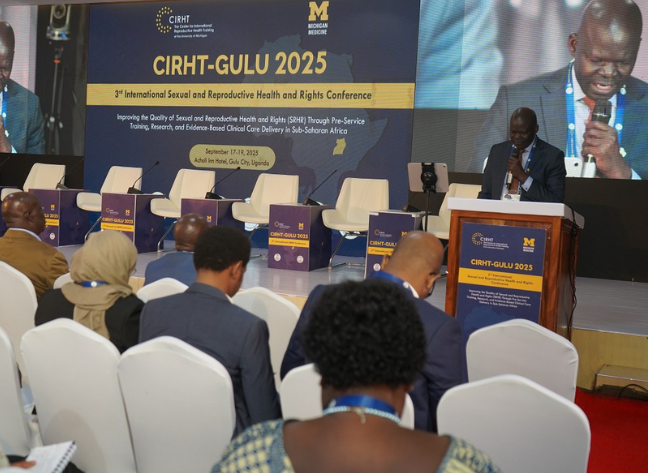

Gulu, Uganda | Lira University’s Deputy Vice Chancellor, Prof. Okaka Opio Dokotum has urged stronger health and policy interventions to address maternal deaths and unintended pregnancies in sub-Saharan Africa.
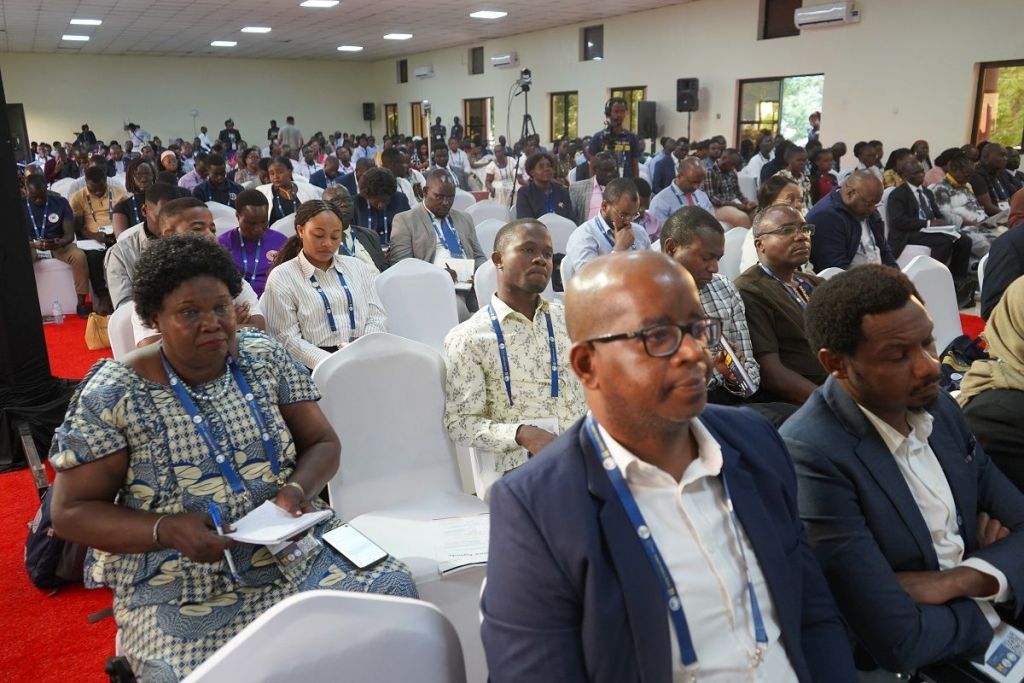
Speaking at the 3rd International Conference on Sexual and Reproductive Health and Rights (SRHR), jointly hosted by Lira and Gulu Universities at Acholi Inn Hotel in Gulu City, Prof. Okaka said maternal mortality and family planning gaps remain urgent public health concerns in Northern Uganda and across the region.
He stressed that these issues should not be seen as statistics but as real experiences of mothers, daughters, and sisters whose lives needed protection.
The three-day conference, which began on 17 September, has attracted participants from more than 50 countries.
It is supported by the Centre for International Reproductive Health Training (CIRHT) at the University of Michigan, a long-standing partner of Lira and Gulu Universities.
Prof. Okaka underlined the importance of the Sustainable Development Goals, particularly SDG 3, which calls for reductions in maternal deaths and universal access to reproductive health services.
He said the meeting was timely and vital as it provided a platform for evidence-sharing, policy dialogue, and practical learning.
He commended CIRHT’s contribution in transforming healthcare training and delivery in Uganda, noting progress in four areas; strengthening pre-service training for healthcare providers, expanding research capacity rooted in local realities, enhancing infrastructure and learning materials for SRHR programmes, and promoting respectful maternity care to uphold the dignity of mothers.
He emphasised that health services and training were the niche of Lira University, pointing out that the institution was established by Parliament to drive post-conflict recovery in Northern Uganda and remained committed to innovation in health sciences.
The Deputy Vice Chancellor argued that universities should not be reduced to ivory towers of theory but must serve as catalysts for change by linking classrooms to clinics and research to community needs.
He highlighted four priorities for the future of maternal and reproductive health; training professionals with both technical competence and cultural sensitivity, conducting research on urgent issues such as adolescent reproductive health and postpartum family planning, co-creating sustainable solutions with communities, and engaging governments to prioritise investment in maternal and child health.
He maintained that a bottom-up approach was necessary, insisting that culture and community perspectives were essential for successful interventions.
Prof. Okaka recalled how, during a visit to Lira University Teaching Hospital, the Vice Chancellor had spoken with a young mother who had just delivered her second child.
The mother explained that beyond medicine, what mattered most was kindness and respect. He said that statement captured the essence of the university’s mission, stressing that compassionate care determined whether women sought services and whether lives were saved.
He further noted that knowledge must be matched with character and compassion, reminding participants of Aristotle’s teaching that education of the mind without education of the heart was incomplete.
The Deputy Vice Chancellor encouraged participants to use the conference to challenge assumptions, share openly, and imagine boldly.
He said institutions should not stop publishing research papers but must translate findings into real change for women, children, and families across Africa.
He concluded that the gathering was more than just an academic meeting but a celebration of partnership, innovation, and commitment to advancing reproductive, maternal, newborn, and child health.
The conference will close on Friday, 19 September 2025, with delegates expected to issue a joint communiqué on strengthening reproductive health systems in Africa.
