


Okwir Haron
Otuke, Uganda | Farmers in Otuke District have been urged to stop cultivating crops in wetlands and adopt alternative income-generating activities to protect the environment and improve livelihoods.
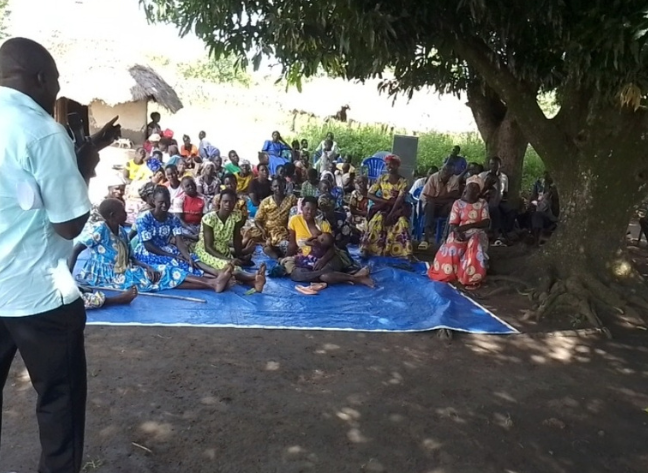
The call was made on Thursday, 18 September, during an engagement with farmers from five villages (Alek-loo Atin, Agwila, Adyerakonya, Acung-apenyi, and Akailo), in Adyerakonya Parish, Adwari Subcounty.
The event was organized by Facilitation for Peace and Development (FAPAD) in collaboration with the National Environment Management Authority (NEMA) and funded by AWO International under the project ‘Strengthening Vulnerable Households.’
Gokaka Geoffrey, NEMA’s Regional Wetland Officer for Northern Uganda, urged farmers whose lands border wetlands to maintain water trenches between gardens.
This measure prevents the erosion of fertile topsoil and protects the wetland ecosystem.
He further advised farmers to use wetlands responsibly for domestic animal grazing and small-scale fishing.
Gokaka cautioned against the use of harmful chemicals such as herbicides, which damage wetlands, block and reduce the population of fish and other aquatic species.
He also encouraged farmers to plant trees, highlighting their role in conserving the environment and enhancing biodiversity.
Asiyati Gift, Agriculture Extension Officer at FAPAD, acknowledged that farmers often fail to implement advice from environmental training, despite attending such sessions repeatedly.
She urged farmers to take practical steps based on the knowledge gained and diversify into other productive ventures, including poultry farming, to generate income outside the wetlands.
NEMA has been educating and sensitizing farmers across Uganda for several years to reduce wetland cultivation, but the practice continues at high levels.
Officials hope that combining awareness campaigns with alternative livelihood options will gradually reduce wetland encroachment, preserve water resources, and improve community livelihoods.

One thought on “FAPAD, NEMA Calls on Otuke Farmers to Protect Wetlands and Diversify Income Sources”