

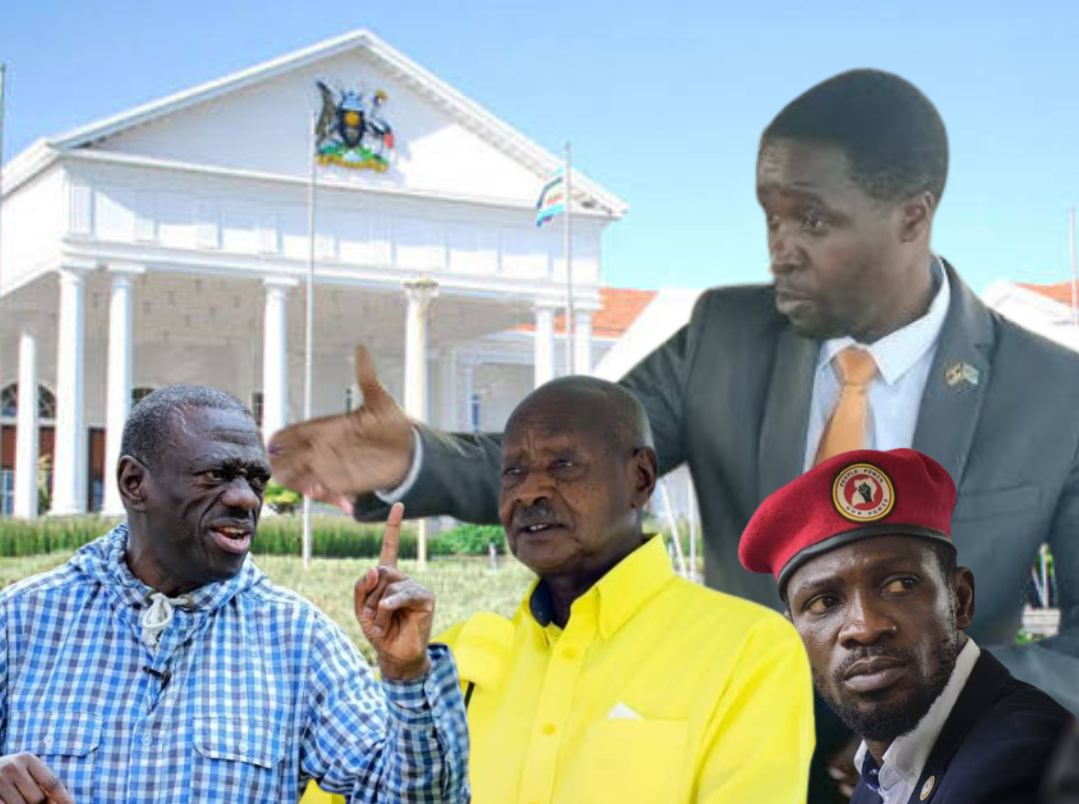

Alebtong, Uganda – Deputy Resident District Commissioner (RDC) for Alebtong Mathias Lutwama has today December 28, 2024, shed light on the enduring presidency of Yoweri Kaguta Museveni, offering a detailed and thought-provoking analysis of the factors contributing to his decades-long rule.
In a recent commentary titled “A Scientific Study on Museveni,” Lutwama attributed Museveni’s success to his strategic intelligence, commitment to decentralization, economic vision, and institutional development.
According to Lutwama, Museveni’s political longevity is rooted in his unparalleled ability to gather precise intelligence on his opponents and deploy strategic engagement.
He contrasts Museveni’s approach with that of opposition groups like the People’s Front for Transition (PFT), National Unity Platform (NUP), and the Uganda People’s Congress (UPC), which he describes as overly reliant on social media campaigns.
Lutwama asserts that Museveni uses “democratic squads” to politically engage and neutralize opposition forces, often winning their support through diplomacy.
Lutwama highlighted Uganda’s 176 local government units, including districts and cities, as critical tools for Museveni’s governance.
By decentralizing government services through programs like the Uganda Women Entrepreneurship Program (UWEP), Youth Livelihood Program (YLP), and the Parish Development Model (PDM), Museveni has secured the loyalty of citizens who prioritize service delivery.
“As long as the NRM state guarantees service delivery, the majority of Ugandans will re-elect Museveni,” Lutwama noted.
Under Museveni’s leadership, Uganda’s exports of coffee, rice, beans, fish, and milk to the Common Market for Eastern and Southern Africa (COMESA) have generated significant revenue.
By November 2024, these exports earned Uganda $1.2 billion. Lutwama argued that this economic growth reflects Museveni’s commitment to positioning Uganda as a competitive player in the global market.
Lutwama also commended Museveni for transforming the Uganda People’s Defence Forces (UPDF) into a world-class institution.
He described the UPDF as a hub of excellence, producing top professionals in engineering, medicine, economics, and law.
The Engineers Brigade, in particular, has spearheaded key infrastructure projects, showcasing the military’s role in national development.
Drawing comparisons to global icons like Ho Chi Minh and Mao Zedong, Lutwama emphasized Museveni’s ability to adapt his leadership to Uganda’s needs.
“In times of war, he focuses on assembling troops and arms. In times of peace, he prioritizes nation-building through institutional and doctrinal development,” Lutwama observed.
Lutwama concluded by acknowledging Museveni’s ability to leverage both peace and conflict to advance Uganda’s development agenda.
From strategic intelligence to economic empowerment and institutional excellence, Museveni’s leadership has firmly rooted him as one of Africa’s longest-serving presidents.
Lutwama’s analysis offers a nuanced perspective on Museveni’s leadership, sparking critical discussions on governance, opposition strategy, and the role of decentralization in Uganda’s political landscape.
As the country gears up for future elections, these insights may shape how both supporters and critics view the president’s enduring legacy.
