
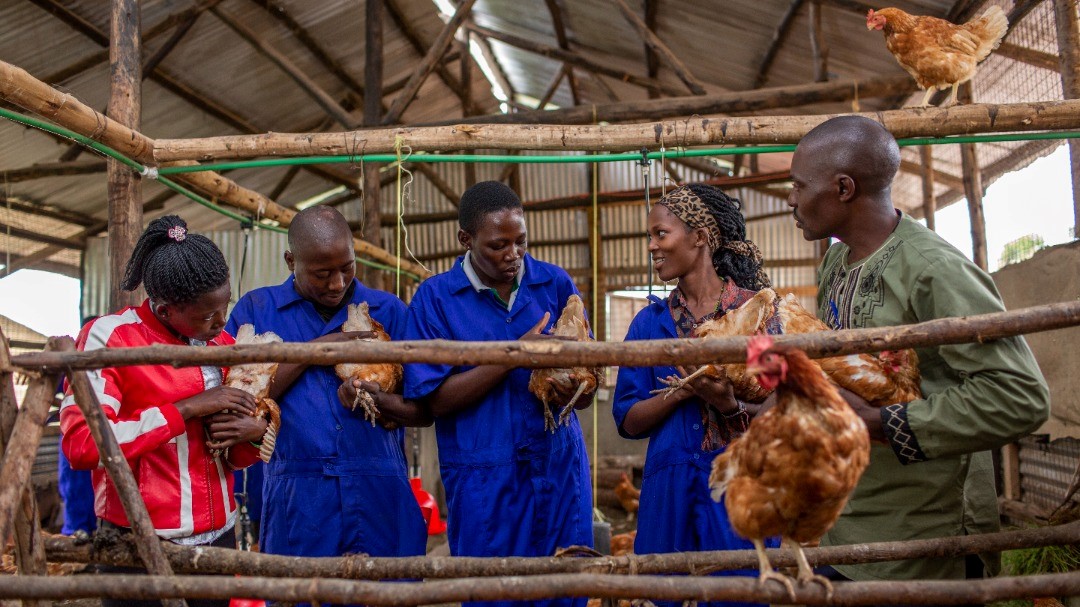

For communities across Uganda where land is scarce, soils are depleted, and climate shocks make crop farming increasingly unreliable, poultry farming offers something rare and precious: a livelihood enterprise that is quick, flexible, and relatively low-risk. BetterLife International Organization has made poultry farming a central pillar of its livelihood diversification strategy, training farmers, building demonstration units, and connecting producers to markets so that chickens can reliably mean income.
BetterLife’s poultry training programme covers the full arc of commercial production. Participants begin with the basics of bird housing: building low-cost, well-ventilated structures that protect birds from predators and disease while keeping construction costs manageable. They learn about nutrition and feed formulation, how to mix locally available ingredients including maize, soy, and fishmeal into balanced rations that promote healthy growth.
Biosecurity receives particular emphasis. Disease outbreaks are the most common cause of poultry losses in smallholder operations, and many can be prevented through simple measures: controlled visitor access, proper cleaning of equipment, vaccination schedules, and early disease recognition. BetterLife trains farmers to implement these measures systematically, dramatically reducing the losses that undermine profitability.
“I lost all my first chickens to disease before BetterLife trained me,” said a farmer from Eastern Uganda. “I was devastated. But the training taught me why it happened and how to prevent it. My second flock survived and I made a profit. Now I am on my fourth flock and I am planning to expand.” His journey is typical: initial setbacks overcome through knowledge, leading to growing confidence and expanding enterprise.
BetterLife’s demonstration farms play an important role in the training process. These are working poultry units where trainees can observe best practices in a real production environment, seeing how proper housing, feeding, and health management translate into productive, profitable flocks. The farms also serve as model units that community members can visit, raising awareness of what small-scale commercial poultry production looks like when done well.
The organisation integrates poultry farming into its broader livelihood portfolio, encouraging farmers to combine poultry with vegetable growing, mushroom cultivation, or beekeeping. Poultry manure is an excellent fertiliser for vegetable gardens. Feed can be supplemented with insects and kitchen scraps, reducing costs. And the income from a productive flock can fund inputs for other enterprises, creating a web of complementary activities that together build household resilience.
Market linkages are a critical component of BetterLife’s poultry programme. Producing chickens is only profitable if there are reliable buyers at fair prices, and BetterLife works actively to connect smallholder producers with local traders, institutional buyers, and cooperative marketing structures. Collective marketing gives individual farmers the scale to negotiate better prices and access markets that would be beyond their reach alone.
As Uganda’s population grows and demand for protein increases, the market for locally produced chicken and eggs is expanding. BetterLife’s poultry programme is positioning small farmers to meet that demand, not as marginal subsistence producers but as suppliers to a genuine commercial market.
