

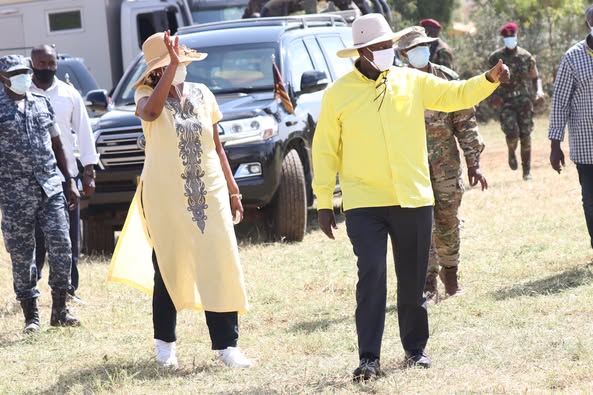

Kotido, Uganda– With just days to go before President Yoweri Museveni’s highly anticipated wealth creation assessment tour of Karamoja region, Kotido District finds itself in an uncomfortable position.
The district leadership is scrambling to find tangible success stories to present to the president, as pressure mounts to showcase the outcomes of government initiatives aimed at alleviating poverty.
Scheduled to visit between December 3rd and 5th, President Museveni will meet with Karamoja leaders in Moroto, visit projects in Abim and Napak, and conclude his tour with a rally in Kotido.
However, local leaders in Kotido are struggling to identify notable successes from government programs like the Parish Development Model (PDM) and Emyooga, initiatives designed to boost economic growth and reduce poverty.
A crisis meeting held by the district leadership on Monday revealed a worrying lack of progress.
Heads of various departments, including the district’s Chief Administrative Officer (CAO), Oola Donato Olam, were left searching for any success stories that could justify the effectiveness of these initiatives.
Despite the urgency of the matter, many officials were at a loss for any tangible outcomes.
The responsibility to highlight successes fell on Robert Kennedy Okuda, the district’s Production Officer, and Francis Obita, the PDM/Emyooga Focal Point Person. However, both were unable to provide compelling stories.
Obita admitted in his report that the Emyooga program, which was designed to help small businesses and community groups, has yielded minimal success in Kotido.
The program’s implementation has been slow, with few groups showing significant growth or economic impact.
On the other hand, Okuda pointed to a handful of farmers using micro-irrigation techniques to grow vegetables for the market.
These farmers, according to Okuda, are earning daily incomes, but he was unable to provide specific figures or broader evidence of how this initiative is changing the economic landscape of the district.
“We have some farmers who are making strides, but the overall transition from subsistence to commercial farming has been slow,” admitted John Magezi Lukooki, the Deputy Resident District Commissioner (RDC) of Kotido. “The pace of economic change here is far behind what we’d hoped for.”
The district’s struggles with poverty alleviation are compounded by the slow shift from traditional livestock herding to agriculture.
Despite government interventions, Kotido continues to grapple with limited access to modern farming techniques, infrastructure, and markets—issues that have hindered the region’s economic transformation.
As the countdown to Museveni’s visit continues, Kotido District faces a pressing dilemma on how to present any concrete evidence of progress in its poverty reduction programs.
The district’s officials are racing against the clock to put forward a narrative that aligns with the president’s vision for economic development, but with limited success to showcase, the task is proving to be an uphill battle.
The situation reflects a broader challenge facing the entire Karamoja region, where years of government programs and promises have yet to significantly change the economic fortunes of its people.
As President Museveni prepares to visit, the district’s leadership is keenly aware that the eyes of the nation will be on them, and the pressure to demonstrate tangible success is mounting.
The district’s leadership is keenly aware that the eyes of the nation will be on them, and the pressure to demonstrate tangible success is mounting as President Museveni prepares to visit the region.
Original story: Radio Etoil
