

AMOLATAR :
In Amolatar District, Uganda, the ongoing Census2024 has become a focal point of contention as three individuals from Christ Church were apprehended by local law enforcement for their steadfast refusal to participate in the government-mandated enumeration.
The arrests have ignited a debate surrounding the intersection of religious convictions and civic responsibilities, shedding light on the delicate balance between individual freedoms and state obligations.
Akite Jennifer and Awor Monica, devout members of Christ Church, stood firm in their refusal to partake in the census, invoking deeply held religious beliefs as the basis for their dissent. Jennifer articulated her position, emphasizing her allegiance to spiritual principles that transcend earthly institutions.
She avowed that her trust lies solely in divine protection, rejecting any form of dependency on government programs. Furthermore, Jennifer underscored her conviction that her one-year-old child is a divine gift, reinforcing her commitment to living according to the tenets of her faith.
Similarly, Monica echoed Jennifer’s sentiments, elucidating the doctrinal precepts that guide their community’s way of life. She expounded on their practices, elucidating their abstention from involvement in worldly affairs, including the care of sick relatives and attendance at funerary rites. Monica elucidated their collective aspiration to prosper within the confines of their religious community, eschewing engagement with governmental initiatives deemed incongruent with their beliefs.
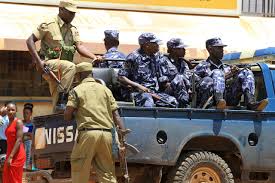
The revelation of Jennifer and Monica’s defiance prompted swift action from local authorities, with the Officer in Charge (OC) of Muntu Police Post, Olio Charles, confirming the filing of charges against the dissenting individuals. The move, spurred by a report from the Government Internal Security Officer (GISO), underscores the legal ramifications of impeding government programs in Uganda.
In accordance with existing legislation, those obstructing or discouraging participation in official endeavors face punitive measures, highlighting the gravity of the situation.
The clash between religious convictions and governmental mandates underscores broader societal tensions surrounding the accommodation of diverse belief systems within the framework of governance.
While individuals are entitled to the constitutional rights of religious freedom and expression, the state also maintains a vested interest in ensuring compliance with civic duties necessary for the functioning of society. The case of Jennifer and Monica serves as a poignant reminder of the complex interplay between personal conscience and collective responsibility in a pluralistic society.
As the Census2024 continues in Amolatar District until May 19th, 2024, the standoff between the adherents of Christ Church and governmental authorities persists, prompting introspection on the limits of religious autonomy and the extent of governmental oversight. The resolution of this dispute is likely to have far-reaching implications for the accommodation of religious diversity within the legal framework of Uganda and may serve as a precedent for future interactions between religious communities and state institutions.