

Kampala, Uganda | The Democratic Party (DP), one of Uganda’s oldest political organisations, is facing growing internal dissent ahead of its Delegates Conference scheduled for Friday May 30, 2025.

A faction within the party has accused its current leadership of deviating from its founding principles and aligning too closely with the ruling National Resistance Movement (NRM) party.
Founded in 1964, the Democratic Party was established on the pillars of democracy, justice, and equality.
Under the leadership of historical figures such as Eng. Joseph Kasolo, Matayo Mugwanya, Benedicto Kiwanuka, Paulo Kawanga Ssemwogerere, and John Ssebaana Kizito, the party weathered decades of political turbulence while maintaining its opposition stance.
However, in recent years, critics within the party say that legacy is being eroded.
The most vocal criticism has been directed at DP President General Norbert Mao, whose cooperation with the NRM government has sparked outrage among sections of the party’s support base.
Mr Mao’s entry into the cabinet as Minister for Justice and Constitutional Affairs in July 2022, following a cooperation agreement signed with President Yoweri Museveni, marked a turning point for the party.
The agreement, facilitated by President Yoweri Kaguta Museveni’s brother, Gen. Salim Saleh was seen by some DP members as a betrayal of the party’s role as a long-standing opposition force.
Supporters who once viewed the Democratic Party as a vehicle for political reform now fear that it is being co-opted into the very system it was meant to challenge.
One senior party official, who asked not to be named, said the Democratic Party had not survived decades of dictatorship only to be reduced to a political accessory, and that this was not the future its founding leaders had envisioned.
With just hours to the Delegates Conference, controversy surrounds the lack of an official delegates list.
Critics argue that failure to release the list raises questions about the integrity of the internal electoral process and the fairness of the upcoming vote.
Analysts say the absence of transparency could undermine confidence in the leadership and deepen internal fractures within the party.
Political commentator Dr. Grace Ssekandi explained that the delegates list was not merely a procedural document but the basis of any credible democratic process.
She noted that its absence at such a critical time was deeply concerning.
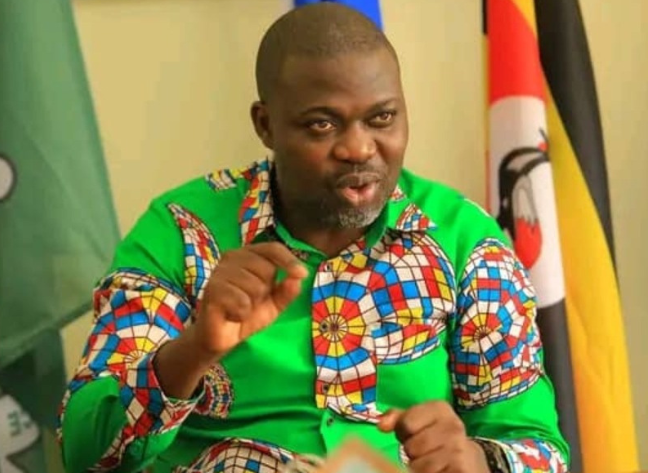
Among those pushing for reform is Hon. Richard Sebamala, the DP legislator for Bukoto Central, who has declared his intention to challenge Mao’s leadership and restore what he describes as the party’s original mission.
Sebamala has positioned himself as a reformist and has urged delegates to remember the reasons behind the founding of the Democratic Party.
He said it was formed to take power—not to surrender it—and called on members to seize the moment and reclaim the future of the party.
His campaign slogan, “Make DP Great Again,” has resonated with sections of the party’s youth and traditional support base who feel alienated by recent decisions.
Friday’s Delegates Conference is expected to be a defining moment for the Democratic Party.
Observers say the event could either mark the beginning of a DP revival or cement its absorption into the political mainstream under the NRM.
As delegates prepare to cast their votes, many are asking whether the Democratic Party can reclaim its founding mission or whether it has already lost its ideological compass.
With tensions running high and uncertainty about the legitimacy of the process, all eyes will be on delegates conference to see which direction the party—once a powerful symbol of Uganda’s opposition politics—will take.