
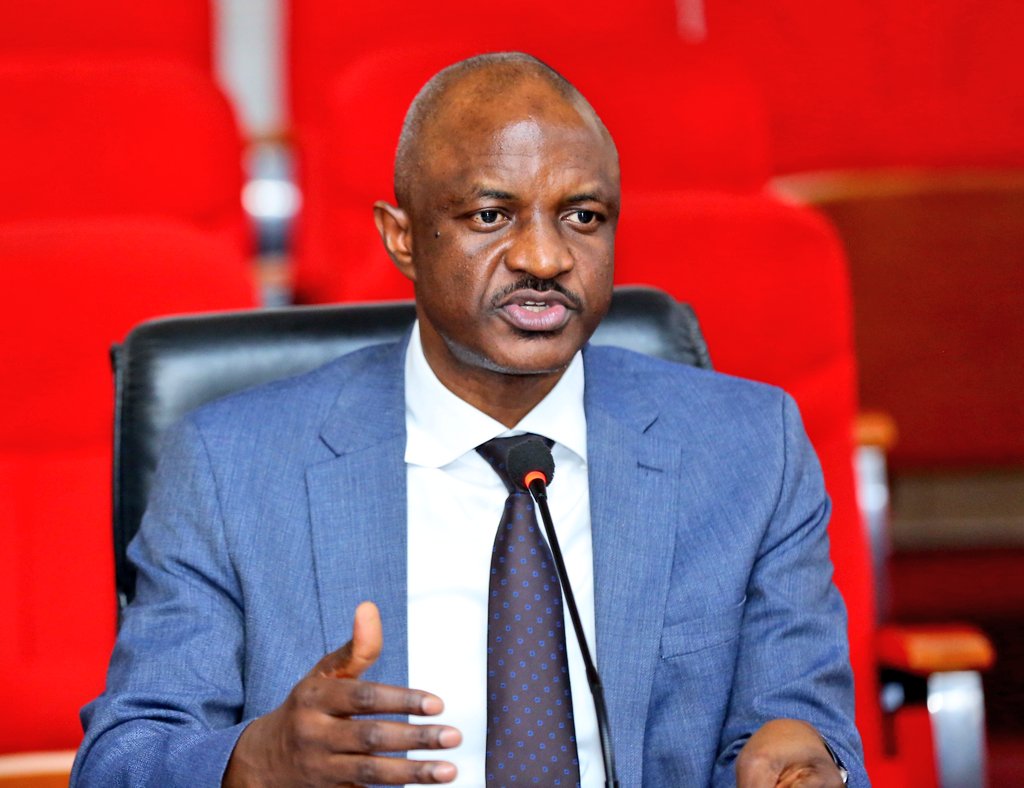

Kampala, Uganda | The Permanent Secretary and Secretary to the Treasury (PSST), Ramathan Ggoobi, has issued a firm directive to all Accounting Officers, Executive Directors and Managing Directors of State-Owned Enterprises and Public Corporations, calling for strict compliance as Government finalizes Ministerial Policy Statements and detailed revenue and expenditure estimates for the Financial Year 2026/27.
In the second Budget Call Circular, Dr. Ggoobi emphasized the need to reinforce fiscal discipline, strengthen performance accountability, align spending to national growth drivers, and eliminate fragmentation in budget allocations.
He directed all Accounting Officers to strictly adhere to the Public Finance Management Act and its attendant regulations and directives, underscoring that budgeting and expenditure controls are critical in strengthening fiscal efficiency, improving execution discipline, and boosting productivity across government institutions.
Dr. Ggoobi explained that the budget for FY2026/27 would prioritize the ATMS and Enablers, with particular attention placed on cleaning up inefficiencies and enforcing strict execution discipline across government entities.
The PSST revealed that the revised resource envelope for FY2026/27 is projected at Shs 78.249 trillion, reflecting an increase of Shs 8.85 trillion from the Shs 69.399 trillion initially communicated in the first Budget Call Circular.
He requested all Accounting Officers to revise their budget estimates in line with the updated indicative planning figures to ensure fiscal realism, coherence, and alignment with national priorities.
To enhance value for money, standardize prices, and achieve economies of scale, government will implement collaborative procurement for common user items under a framework arrangement effective 1st July 2026. The measure is expected to improve quality standards, eliminate duplication, and strengthen efficiency across Ministries, Departments, Agencies (MDAs), and Local Governments.
In line with Cabinet Minute 164 (CT 2025), Dr. Ggoobi directed that as institutions finalize their budgets for FY2026/27, they must not enter into agreements or Memoranda of Understanding with Development Partners on governance matters without prior clearance from Cabinet. The directive, he noted, is intended to ensure policy coherence and safeguard national interests.
The PSST further revealed that the Ministry of Finance is developing a comprehensive Planning Strategy aimed at strengthening the planning function in Government.
To enhance performance and support the programme-based budgeting approach, Government has allocated an additional Shs 200 million to each Ministry Planning Unit and Shs 100 million to each Agency and Local Government Planning Unit.
He emphasized that these funds are strictly earmarked for research-based planning, equipping planning units, staff training, and facilitation to support effective programme implementation, and must not be diverted for any other purposes.
The circular signals a tightening fiscal environment as Government sharpens its focus on execution discipline, strategic alignment, and value-for-money spending in the 2026/27 financial year.