
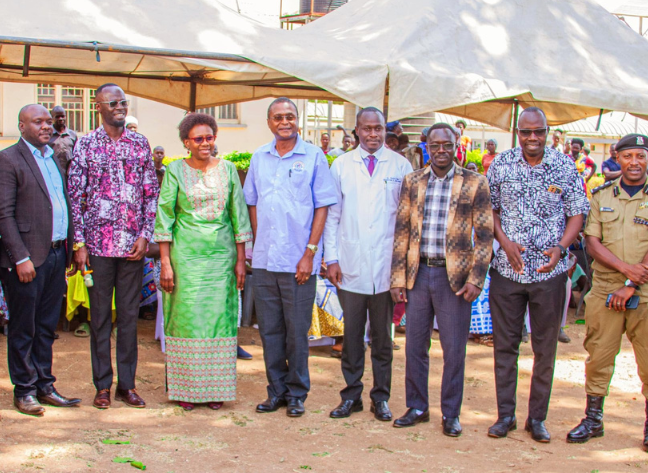

Lira, Uganda | Lira City is rapidly gaining recognition as one of the most secure and politically stable urban centers in Northern Uganda, not merely through force or surveillance, but by building a unique model of people-centered security and collaborative governance.
At the heart of this transformation is Resident City Commissioner (RCC) Emmy Lawrence Egole, whose strategy has focused on trust-building, civic inclusion, and proactive engagement with the public.
In a region historically affected by political friction and pockets of insecurity, Lira’s turnaround has been defined by community integration into the security process, a shift from top-down enforcement to bottom-up participation.
RCC Egole and his team have redefined what security leadership looks like, prioritizing community dialogue, transparency, and mutual responsibility between security forces and residents.
Under Egole’s coordination, the city’s multi-agency security framework composed of the Uganda Police Force, Uganda People’s Defence Forces (UPDF), and the Office of the RCC, has implemented policies that actively involve local communities in maintaining peace.
Regular city hall security meetings, youth engagement forums, and support for local initiatives have created shared ownership of the city’s safety.
The decentralized nature of the RCC’s office has been key to this success.
Deputy RCC Stephen Odongo and Assistant RCCs Bonny Okello Alele and Bonny Otucu are not confined to administrative offices.
Instead, they have been a constant presence in markets, parishes, schools, and churches, directly engaging the public and addressing issues before they escalate.
Their community-first approach has not only de-escalated tensions but also enhanced the visibility of government programs and services at the grassroots.
The Uganda Police Force, together with the UPDF, has maintained high operational standards while deliberately shunning intimidation tactics often associated with enforcement work.
Police and military personnel in Lira are now seen as facilitators of peace, not as instruments of political coercion.
This shift has contributed to the dramatic reduction in crime, increased reporting of domestic violence cases, and a growing culture of community watch networks.
The city has also become an example of political maturity and tolerance, with ruling party officials and opposition figures now engaging in public affairs without confrontation.
This is in stark contrast to past years, or to areas like Sembabule, where recent incidents have highlighted lingering distrust between political groups and security agencies.
As a result, Lira’s development indicators are on the rise. Investors are regaining confidence.
Youth-led projects and civic groups are thriving in an environment free from fear.
Skilling initiatives backed by local leaders and security teams have enrolled hundreds of young people.
Women groups report better access to local leaders and improved support in gender-based protection services.
These outcomes are not only signs of peace. They are the fruits of a deliberate governance shift that prioritizes people over politics, dialogue over division, and inclusion over enforcement.
Analysts now point to Lira as a potential blueprint for other cities, navigating the complexities of post-conflict development, urban insecurity, and political polarization.
What makes the Lira model stand out is not just the effectiveness of its leadership but the deep connection between authority and community.
Uganda currently looks toward its Vision 2040 agenda, Lira City’s story demonstrates that true security is not built by guns alone but by trust, visibility, and service-oriented leadership.
In Lira, peace is no longer a promise. It is a shared responsibility in action.