

By Brain Ajon
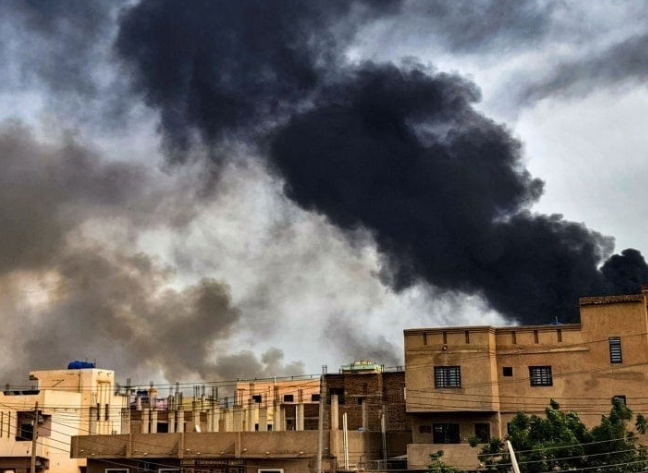
Khartoum, Sudan | Sudan’s war has entered a dangerous phase in which the fighting between the Sudanese Armed Forces (SAF) and the Rapid Support Forces (RSF) is increasingly shaped by regional interests, sophisticated weapons and a deepening humanitarian crisis.
The conflict, which erupted on April 15, 2023, has displaced more than 15 million people inside and outside Sudan, according to the International Organization for Migration (IOM). By January 2025, internal displacement alone had reached more than 11.5 million people. IOM says more than 33.7 million people are in need of humanitarian assistance in 2026.
The scale of the crisis has placed enormous pressure on relief agencies. IOM’s humanitarian response includes a common pipeline for shelter and other emergency supplies, with warehouses and cross-border operations supporting areas that are difficult for humanitarian agencies to reach.
Despite repeated diplomatic initiatives, the war continues. Both the army and the RSF have faced international accusations of serious violations of international humanitarian law. The United States previously determined that members of both forces had committed war crimes, while accusing the RSF and allied militias of crimes against humanity and ethnic cleansing.
One of the most serious and controversial issues surrounding the conflict is the alleged use of chemical weapons.
In 2025, the United States said it had determined that chemical weapons were used in Sudan in 2024 and imposed sanctions in connection with the finding. At the Organisation for the Prohibition of Chemical Weapons (OPCW), Washington has since maintained that Sudan needs to declare any chemical production facilities and munitions and cooperate with international verification.
The allegations have been disputed by Sudan. Khartoum established a national committee to investigate the US claims, saying it did not accept their validity and would investigate them in accordance with Sudan’s international obligations under the Chemical Weapons Convention.
The controversy has also generated reports alleging the use of chlorine-based weapons. However, establishing responsibility and independently verifying such allegations remain important questions for international investigators.
Sudan has been a party to the Chemical Weapons Convention since 1999, meaning the use of chemical weapons would constitute a violation of its international obligations. The OPCW has urged Sudan to cooperate in addressing the allegations.
Beyond the battlefield, Sudan’s war has become increasingly connected to the strategic interests of neighbouring and regional powers.
Egypt has openly expressed support for the Sudanese army while denying that it is directly providing military assistance to either side. Cairo regards developments in Sudan as closely linked to its national security.
That involvement came under renewed scrutiny in 2026 after Reuters reported the deployment of Turkish-made Bayraktar Akıncı drones at Egypt’s East Oweinat airbase, about 60 kilometres from the Sudanese border. Satellite imagery showed the drones at the facility, while experts cited by Reuters assessed that they could be used for operations inside Sudan.
The RSF has accused Egypt of conducting airstrikes in Sudan, while Cairo has denied supporting either side militarily. The reported deployment nevertheless illustrates how Sudan’s war has increasingly acquired a regional security dimension.
Saudi Arabia has also remained an important diplomatic and strategic player.
Riyadh has participated in mediation efforts alongside the United States, Egypt and the United Arab Emirates, while maintaining significant economic and security interests linked to Sudan and the Red Sea.
The Red Sea is particularly important to Saudi Arabia because of its proximity to the kingdom’s western coast and its strategic maritime routes. Sudan’s Port Sudan also provides access to one of the region’s most important waterways.
Reports of arms arrangements involving outside powers have added another layer to the conflict. The continued flow of weapons into Sudan has repeatedly raised concerns that external support could prolong rather than resolve the fighting.
Turkey has also emerged as an important actor in the conflict, particularly through its defence relationship with Sudan.
Sudanese army chief Abdel Fattah al-Burhan has held talks with Turkish President Recep Tayyip Erdogan, while defence cooperation between Ankara and Khartoum has expanded.
A March 2025 investigation by The Washington Post cited documents, communications, commercial records and flight data that it said showed Turkish-made weapons and drones reaching the Sudanese army. The investigation reported a contract worth about $120 million between Sudan’s Defence Industries System and Turkish defence company Baykar for drones and munitions. Turkey has denied providing military support to either side.
The reported use and availability of advanced drones have become increasingly significant as the conflict evolves. In May 2026, Reuters reported that drones had become a predominant weapon in the war, with strikes affecting Khartoum, Omdurman, and other locations.
The growing reliance on drones has raised fresh concerns over civilian protection.
The conflict has already devastated hospitals, markets, water systems, and other civilian infrastructure. IOM says severe attacks against civilians and objects essential to their survival continue to be documented, with the United Nations finding violations of international human rights and humanitarian law, many of which amount to war crimes.
For civilians, the distinction between front lines and areas away from the battlefield has become increasingly difficult to maintain. Air and drone strikes have expanded the reach of the war while displacement and food insecurity continue to worsen.
The humanitarian consequences are particularly severe in Darfur, Kordofan, and other areas where access for aid agencies remains difficult.
The international pressure on Sudan’s military leadership has also increased.
In January 2025, the United States sanctioned Gen. Abdel Fattah al-Burhan, accusing forces under his command of targeting civilians and civilian infrastructure, carrying out killings, and obstructing humanitarian assistance. Washington had earlier sanctioned RSF leader Mohamed Hamdan Dagalo, known as Hemedti.
The US has maintained that neither side can provide a military solution to Sudan’s crisis and has called for a return to a civilian political transition.
The latest diplomatic pressure was illustrated this week when Reuters reported that Washington was withholding a visa for Gen Burhan ahead of the United Nations General Assembly, amid efforts to secure his acceptance of a proposed 90-day ceasefire.
The dispute highlights the difficult position of international mediators: Burhan remains a central figure in negotiations over Sudan’s future, even as Washington continues to impose pressure on his leadership.
After more than three years of fighting, Sudan’s crisis has moved far beyond a conventional contest for power between two armed factions.
The conflict has become intertwined with regional security interests, arms transfers, economic interests, and competing diplomatic initiatives. Yet the cost continues to be borne primarily by civilians.
IOM’s latest assessment describes Sudan as the world’s largest displacement crisis, with nearly one in three Sudanese having been forced from their homes since the war began.
As allegations of chemical weapons use, drone warfare and foreign military assistance continue to emerge, the central challenge remains unchanged: securing a ceasefire, ensuring humanitarian access and creating a credible path towards a civilian political settlement.
Until that happens, Sudan risks remaining trapped in a war in which the battlefield continues to expand while the space for civilians to find safety continues to shrink.