

Kampala, Uganda | In a profession often overshadowed by pilots and air traffic controllers, aviation engineers have stepped into the spotlight as Uganda hosts the 15th Africa Regional Meeting of the International Federation of Air Traffic Safety Electronics Associations (IFATSEA).

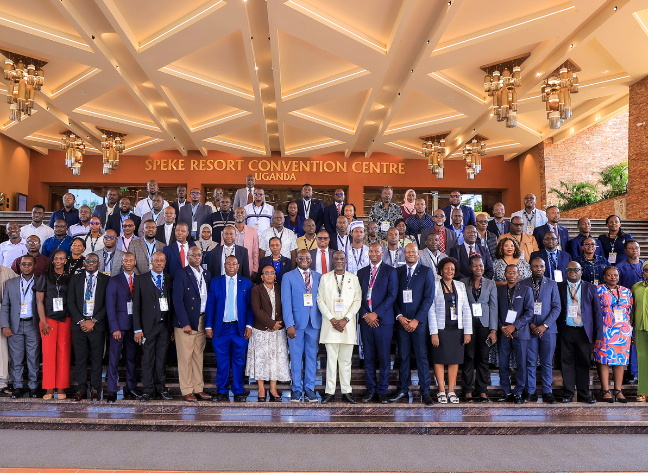
The three-day summit, taking place at the Speke Resort Convention Centre in Munyonyo from 17–19 June 2025, puts Air Traffic Safety Electronics Personnel (ATSEPs) at the centre of Africa’s aviation transformation.
Organised by the Uganda Civil Aviation Authority (UCAA) in collaboration with the Uganda Air Transport Safety Engineering Association (UGATSEA), the meeting has attracted over 100 aviation safety engineers and technical experts to discuss how emerging technologies can help elevate aviation standards across the continent.
Behind every safe landing or seamless flight operation lies the technical expertise of air traffic safety electronics engineers, the professionals responsible for maintaining the Communication, Navigation, and Surveillance (CNS) systems that support aviation.
These engineers ensure that radars operate reliably, signals remain stable, and critical digital systems remain secure.
Eng. Ayub Sooma, the Director of Airports and Aviation Security at UCAA, speaking on behalf of the Director General, said ATSEPs were the backbone of modern air navigation.
He noted that their innovation, precision, and commitment were vital in maintaining safety and efficiency.
He praised UCAA’s engineering teams for designing homegrown tools such as the Aeronautical Billing System, the Computerized Maintenance Management System, and the Balanced Scorecard Strategy Tool, saying these innovations were enhancing transparency and operational performance.
He also explained that Uganda had adopted internationally recognised navigation strategies such as Performance-Based Navigation (PBN), Direct Routing, and Continuous Climb and Descent Operations, which are reducing emissions, enhancing fuel efficiency, and improving the overall passenger experience.
Unlike many nations that heavily depend on foreign technology, Uganda has made significant progress in developing local aviation solutions.
The in-house systems created by UCAA engineers are now viewed as potential models for other African states aiming for self-reliance and sustainability.
Hon. Justice Steven Kavuma, the Chairman of the UCAA Board of Directors, speaking on behalf of the Minister of Works and Transport, stated that Africa’s engineers needed to be equipped to lead in a rapidly evolving digital landscape.
He emphasised that the gathering was not only a technical exchange but also a reminder that engineers were strategic actors who could help shape the future of aviation on the continent.
The second day of the summit focused on integrating artificial intelligence (AI), cybersecurity, and drone technology into aviation systems.
Mr. Joseph Katongole, a Senior Technical Officer at UCAA, explained that AI was now playing a crucial role in aviation, enabling predictive maintenance, enhancing hazard detection, and safeguarding networks from cyber threats.
He cautioned, however, that even as systems become more automated, human oversight would remain essential.
During a panel moderated by Ms. Angela Kabali from the Tanzania Civil Aviation Authority, industry experts explored how AI could be integrated into CNS/ATM systems.
They also addressed potential implications for cybersecurity and system reliability.
Elsewhere, Mr. Kazungu Daniel from the Kenya Civil Aviation Authority presented the use of drones for flight inspection of navigational aids.
He pointed out that drones were offering significant benefits such as improved accuracy, cost savings, and minimal disruption to airspace operations.
A separate session highlighted how data analytics and machine learning were allowing Air Navigation Service Providers to shift from reactive to predictive maintenance models, leading to increased system uptime and operational cost-efficiency.
Despite the strong emphasis on digital transformation, a recurring theme throughout the summit was the irreplaceable role of human expertise.
Delegates repeatedly noted the need to train and empower ATSEPs to operate and manage emerging technologies effectively.
Eng. Frank Kofi, President of IFATSEA, concluded the day by stressing that while technology was essential, it should enhance rather than replace human capacity.
He noted that engineers remained the gatekeepers of aviation safety and that their ability to adapt would determine how effectively Africa embraces the next wave of innovation.
The 15th IFATSEA Africa Regional Meeting marks a pivotal moment for aviation in Africa—highlighting the critical role of engineering talent, indigenous innovation, and sustainable digital transformation.
Uganda’s hosting of the summit showcased its growing leadership in aviation safety and technology while reinforcing a broader continental commitment to empowering Air Traffic Safety Electronics Personnel.
With momentum now building, African engineers are poised not just to support aviation systems but to lead the charge in shaping the skies of tomorrow.