

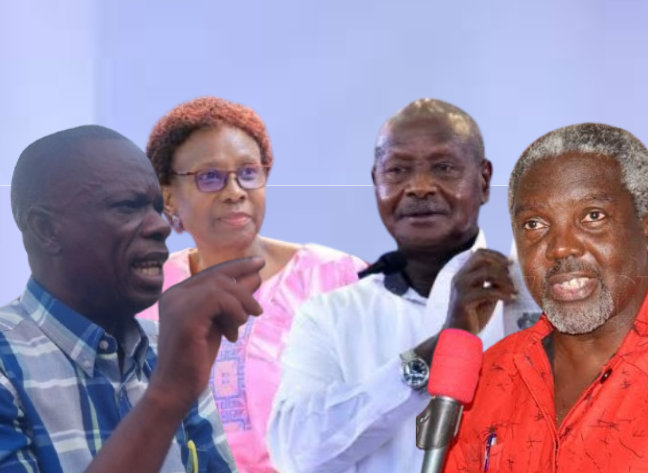
Lira, Uganda — Acai Godwin, the Uganda People’s Congress (UPC) Chairperson for Bazar Parish in Lira City East Division, has publicly criticized the party’s top leadership for gross mismanagement, constitutional violations, and lack of strategic direction ahead of the 2026 general elections.
Addressing journalists at Pacific Grand Hotel on, April 11, 2025, Friday evening, Acai, a long-serving UPC supporter, expressed deep frustration with the party’s current state.
He categorically stated that, under the prevailing circumstances, UPC will not front a presidential candidate in 2026 unless urgent reforms are undertaken.
Acai accused UPC President Jimmy Akena and Secretary General Fred Ebil Ebil of ignoring the party constitution.
He noted that while the Electoral Commission has already issued its 2026 roadmap and other political parties (NRM, NUP, FDC, DP) have started internal processes, UPC has not even issued its roadmap.
He referenced Article 14(a) of the UPC Constitution, which limits a party president to two terms.
Acai stated that Akena is now serving his second and final term and is therefore constitutionally barred from running again.
He questioned why Akena and his appointees, including the Secretary General and Treasurer, have served for nearly 10 years without approval from a Delegates Conference, which is constitutionally required twice every five years.
Acai demanded an apology from Akena for recently referring to the UPC Constitution as “just a booklet” during the Voice of Lango 88.0 FM-Wimeja radio program. He called the statement reckless and disrespectful.
He pointed out unresolved court cases involving Akena and former UPC leaders Olara Otunnu and Joseph Bossa.
Acai stated that only the old leadership retains the legal mandate to call a Delegates Conference.
He added that Akena has never initiated reconciliation with rival factions since taking over leadership, further deepening party divisions.
Acai criticized Akena for failing to reconcile with other key UPC leaders and factions, including those led by Peter Walubiri, Joseph Othieno, Tom Omino, and Denis Adim Enap.
He said this disunity has fractured the party’s national image, especially between Lango and Acholi subregions, and makes mobilization nearly impossible in regions like Buganda, which holds Uganda’s largest voting population.
According to Acai, UPC activities are currently only visible in Lango Subregion.
He questioned the authenticity of claims that national registration is ongoing, stating that even if all of Lango’s estimated 1.7 million voters supported Akena, it would still be insufficient to win a national election.
Acai expressed discontent with UPC’s growing closeness to the ruling NRM party.
He specifically pointed to Minister Betty Amongi, wife to Akena, whom he accused of politically undermining UPC by allegedly negotiating backdoor deals with President Museveni.
Acai questioned why Amongi, who now intends to contest in Lira City instead of her Oyam South stronghold, has never openly campaigned for her husband’s presidential ambitions.
He challenged Amongi to publicly declare support for Akena’s presidential bid over Museveni’s, stating that failure to do so confirms she is only using UPC for personal gain.
“I have worked with Akena for over 20 years, but this time, the party is in danger,” Acai said.
In a surprise political shift, Acai announced that he and like-minded UPC members will openly support Dr. Jane Ruth Aceng Ocero for Lira City Woman MP and President Yoweri Kaguta Museveni in the 2026 elections.
He claimed Amongi has already lured some NRM members to back her campaign, undermining UPC’s integrity in Lango.
Having supported President Museveni in every presidential election since 1996, Acai declared that he no longer sees UPC as a viable political force under its current leadership.
“UPC is not ready, not organized, and not united. Without immediate reform, it has no future in 2026,” he concluded.
This public statement marks one of the strongest internal criticisms against Jimmy Akena’s UPC leadership and sets the stage for intensified political realignments ahead of the 2026 polls.
