

By Chris Woo
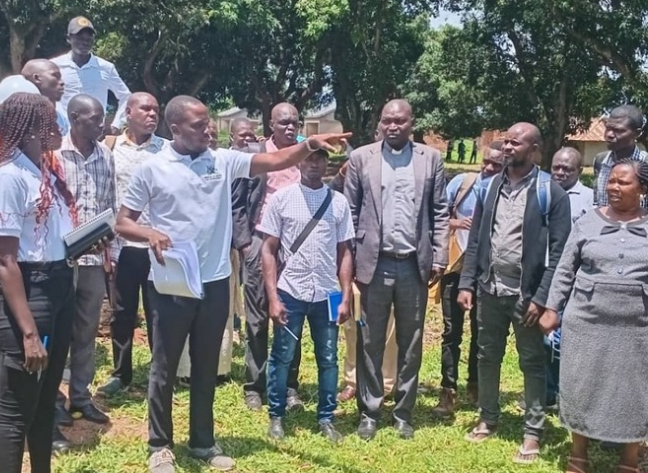
Oyam, Uganda — A new chapter in Uganda’s education and public health sectors has begun with the launch of a €140 million Water, Sanitation, and Hygiene (WASH) Facility Project, funded by the European Union.
The five-year program, officially launched yesterday at Minakulu Primary School in Oyam District, is set to benefit 199 schools across the country, including 24 in Oyam alone.
The initiative, implemented by the Ministry of Water and Environment, aims to confront the persistent problem of poor sanitation in schools—an issue that disproportionately affects girls and contributes to high dropout and absenteeism rates.
The project introduces national hygiene-compliant toilet facilities and will also invest in constructing classrooms and staff housing to improve learning environments.
Sinandugu Silvaster, representing the Ministry of Water and Environment, stated that the WASH project is a strategic intervention to support girls transitioning from primary to secondary education.
“Many schools lack basic sanitation, which forces girls to miss class or drop out altogether during menstruation. These new facilities are designed to meet national hygiene standards and restore dignity and opportunity to young learners,” he said.
He added that a key focus of the project is ensuring sustainability through rigorous construction standards, accountability mechanisms, and proper facility maintenance.
Oyam District LCV Chairperson, Benson Walter Dila Oyuku, welcomed the project as a timely boost to the education sector. He emphasized the need for transparency and high performance among contractors. “We must ensure every shilling is accounted for and that these projects deliver long-term value. This is not just infrastructure—it’s a foundation for future generations.”
Resident District Commissioner Sgt. Shilaku James echoed these sentiments, noting that development partners like the EU are filling a critical gap in public service delivery.
At the community level, the project is already having ripple effects. Minakulu Primary School PTA Chairperson, Charles Chong, described the WASH project as “a blessing.”
He revealed that many girls who had previously dropped out due to a lack of sanitary facilities were now returning to class, and he encouraged parents to support the reintegration of child mothers.
Head teacher Rose Alok confirmed that 15 child mothers have resumed studies since awareness campaigns began. Still, she warned of critical gaps.
With over 2,400 pupils, the school suffers from a severe shortage of teachers and classrooms. One Primary One stream has 461 pupils—handled by just two teachers.
“When one teacher is sick, learning collapses,” she said, appealing for additional teaching staff and infrastructure.
Other beneficiary schools in Oyam include Dr. Oryang Secondary School, Abdullah Anyuru Memorial Senior Secondary School, among others.
All selected schools will receive sanitation upgrades and essential infrastructure to improve retention, especially for girls.
The WASH project stands not just as a health and education intervention but as a community development tool that bridges gender inequality, promotes dignity, and strengthens the public education system.