

By Benard Opio
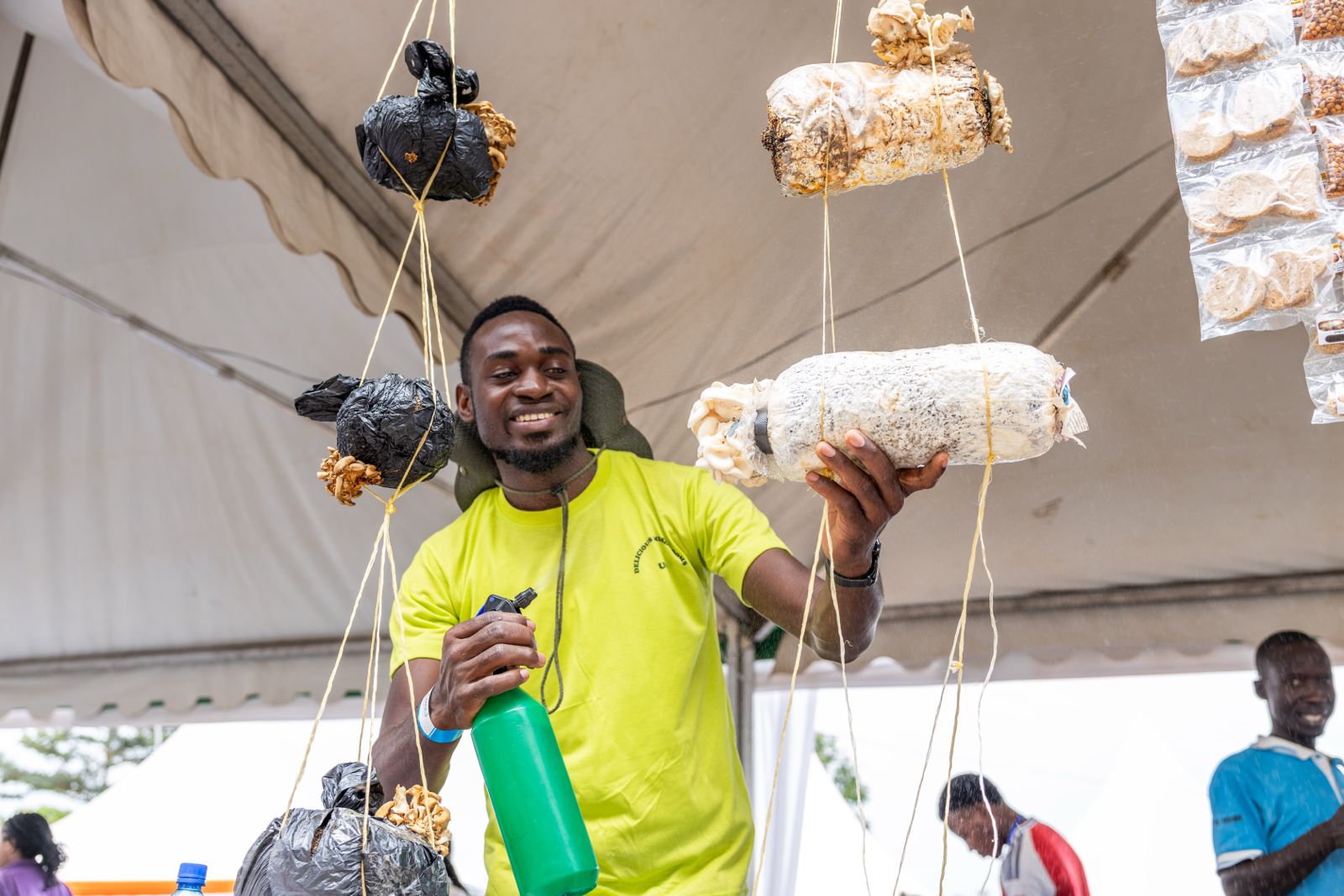
In a modest growing house on the outskirts of a Ugandan village, rows of substrate-packed logs hang from wooden frames, their white mycelium spreading steadily in the humid air. Within weeks, clusters of oyster mushrooms will burst through the surface, ready to be harvested, sold at market, and turned into nutritious meals for families who once struggled to afford protein.
This is mushroom farming as BetterLife International Organization teaches it: a low-cost, high-yield enterprise that requires minimal land, uses agricultural by-products as substrate, and can be managed by a single household or a community group. Over the past two years, BetterLife has introduced mushroom cultivation to dozens of farming communities across Uganda, helping participants access a reliable source of both food and income.
The appeal of mushroom farming for small and marginalised producers is significant. Unlike traditional crops, mushrooms can be grown year-round regardless of rainfall. They do not require cleared land or expensive chemical inputs. The substrate is typically a mix of sawdust, straw, and bran, which is widely available and inexpensive. A single growing cycle takes between three and six weeks, providing farmers with a rapid return on investment that suits households with limited capital.
“Before I started mushroom farming with BetterLife, I was struggling to buy vegetables for my children,” said Nalubega, a single mother of four in central Uganda. “Now I harvest every two weeks and sell at the market. I have money for school fees and food in the house.” Her story is one of many: women and youth who have turned a modest space and a small investment into a sustainable livelihood.

BetterLife’s training programme covers every stage of mushroom cultivation: substrate preparation and sterilisation, inoculation, environmental control, harvesting, and post-harvest handling. Participants are also trained in basic food hygiene and packaging so they can sell mushrooms in local markets and to restaurants and hotels, markets that increasingly demand fresh, locally grown produce.
The nutritional dimension of mushroom farming is equally significant. Oyster mushrooms are a rich source of protein, vitamins B and D, potassium, and fibre, nutrients that are frequently lacking in the diets of low-income communities in Uganda. By producing and consuming mushrooms, farming households improve their dietary diversity without increasing food expenditure. This has a particularly important impact on child nutrition and maternal health.
Beyond individual households, BetterLife has used mushroom farming as a platform for building community enterprise. Several groups have formed small cooperatives that share equipment, pool their produce, and access bulk markets together. This cooperative model amplifies income while reducing risk, which are core principles that run through all of BetterLife’s livelihood programming.
As Uganda’s agricultural sector faces increasing pressure from climate variability, the resilience of mushroom farming makes it an especially valuable tool. It thrives indoors, independent of seasonal rains, and can be scaled up or down in response to market demand. For BetterLife, it is more than a crop. It is a gateway to food security, economic empowerment, and community resilience.
