

Lira, Uganda | Lira Regional Referral Hospital (LRRH) is currently managing over 1,400 individuals enrolled at its Sickle Cell Clinic, with 80% of them receiving hydroxyurea therapy, a critical drug for managing Sickle Cell Disease (SCD).

The hospital, which serves as the primary care centre for sicklers across Lango Subregion, has been mandated to lead SCD care and coordination in northern Uganda.
All Health Centre IVs in the region have been trained to identify sickle cell patients, and Apac General Hospital is now being equipped to begin SCD testing.
Every child born at LRRH undergoes routine SCD screening, with advanced samples sent to Kampala for confirmation.
According to hospital authorities, Lango and Acholi Subregions continue to register the highest prevalence rates in the country, a situation attributed in part to intermarriages across the many clans in the region.
Uganda remains the only Sub-Saharan African country with a national Sickle Cell programme, which has mapped out a structured eradication plan.
Officials estimate that 30% of blood donations collected nationally are consumed by SCD patients.
During the commemoration of World Sickle Cell Day held at Mayor’s Garden in Lira City on Thursday, June 19, 2025, under the theme; “All of us united by donating blood for Sickle Cell patients and others,” LRRH Director Dr. Andrew Odur urged cultural and community leaders to encourage genetic testing prior to marriage as a means to reduce the disease’s transmission.
He called on stakeholders, including civil society organisations, to intensify public sensitisation efforts while also commending the National Medical Stores (NMS) for timely supply of hydroxyurea.
Dr. Odur appealed to the Ministry of Health to decentralise SCD care, enabling health facilities in Amach, Ogur, Ober, Apac, among others to provide screening and treatment.
He emphasized that LRRH, while leading in care, can not handle the growing burden alone.
Lira City Health Officer Dr. Benard Otucu echoed these concerns, noting that Lira leads the country in SCD burden, yet LRRH remains the only facility with hydroxyurea and necessary supplements.
He stressed that access to care remains uneven and called on government and partners to bring services closer to communities.
The day’s Guest of Honour, Minister of Health and Lira City Woman MP Dr. Jane Ruth Aceng Ocero highlighted the painful and resource-draining nature of the disease.
She called on couples to test for sickle cell traits before marriage to avoid giving birth to children with SCD.
Dr. Aceng explained that Sickle Cell Disease is a genetic condition and emphasized that its prevention begins with individual responsibility.
She pointed out that a person living with the disease can lead a healthy life if they avoid marrying another carrier.
The Health Minister also reiterated her long-standing commitment to the fight against Sickle Cell, noting that her first initiative after joining Parliament in 2021 was the establishment of the Sickle Cell Clinic at LRRH.
She revealed that testing machines will be installed at Ober and Ongica Health Centre IVs to expand diagnostic capacity.
She also announced that a Regional Blood Bank under construction near Lira University will reach the roofing level by the end of the year to improve access to safe blood.
The event also featured testimonies from clients like Mrs. Ruth Nankanja Mukiibi, a 51-year-old sickler and teacher who was diagnosed at six months.
She shared how, with proper care and adherence to medical guidance, she has lived a full life, raised children, and fought stigma.
National Sickle Cell Coordinator Dr. Charles Kiyaga traced Uganda’s current response to a 2013 Ministry of Health study which revealed Lango as the region most affected.
He said the findings led to a national newborn screening and awareness programme despite limited funding.
He applauded small community-level efforts that have contributed to the progress seen over the past decade.
According to the Uganda Sickle Cell Surveillance Study of 2015, 13.3% of Uganda’s population carry the sickle cell trait, while 0.7% live with the disease.
The Mid-North and East-Central regions, including Lango, recorded trait rates nearing 20% and SCD prevalence of over 1%.
Fourteen districts, including Lira, Gulu, Apac, Oyam, and Kampala, account for 47% of the national burden.
Speaking on behalf of the Director General of Health Services, Dr. Richard Mugahi, Commissioner for Maternal, Reproductive, and Child Health, urged the public to dismiss myths that SCD is a curse, stating it is genetically inherited.
He encouraged both SCD and HIV, Syphilis, and Hepatitis B testing, emphasizing the need for preventative health behaviour.
Lira City Mayor His Worship Sam Atul acknowledged Lango’s disproportionate burden, warning against intermarriages among clans with common ancestry.
He urged sicklers to avoid compounding their health challenges with other preventable diseases.
Deputy Resident City Commissioner (DRCC) Stephen Odongo, who represented the Resident City Commissioner, praised Aceng’s contributions and said false propaganda against her leadership would not derail the ongoing health improvements in Lira City.
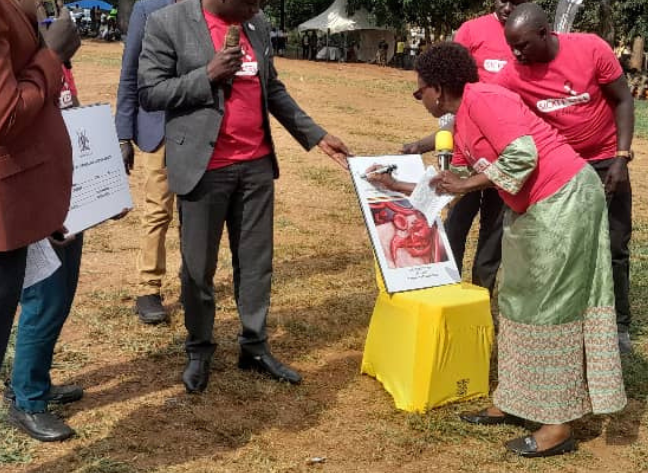
Dr. Aceng concluded by launching national Sickle Cell management guidelines developed by PEN-Plus and the Ministry of Health, encouraging health workers to adopt them as standard in managing SCD patients.
She also called for increased blood donations to save lives, particularly for SCD patients who require frequent transfusions.
The event attracted hundreds of participants, including students, health practitioners, patients, and advocates from across the Lango Subregion.
Partners present included the Ministry of Health, Uganda Blood Transfusion Services, Catherine Phills Sickle Cell Initiative (CAPSCI), and others.
Health experts reaffirm that fighting SCD requires collective community effort, early testing, adequate treatment, and elimination of stigma to ensure that children born with the disease live long and productive lives.