
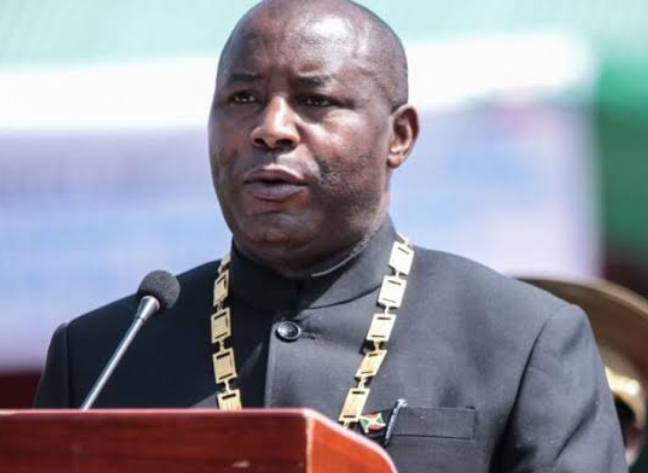

Gitega, Burundi – President Évariste Ndayishimiye has made shocking claims that Rwanda is preparing to attack Burundi, citing what he described as “credible intelligence” about Rwanda’s intentions.
The accusations come at a time of heightened tensions in the Great Lakes region, particularly as Rwanda’s involvement in the ongoing conflict in the Democratic Republic of Congo (DRC) has come under increasing scrutiny.
In a recent BBC interview, Ndayishimiye criticized Rwanda for allegedly supporting rebel groups like M23 and Red Tabara, accusing Rwanda of orchestrating efforts to destabilize Burundi, much like it is accused of doing in the DRC.
Rwanda, however, has strongly denied these allegations, calling them “surprising” and asserting that the two countries are cooperating on security concerns, especially along their shared border, which has been closed for more than a year.
Ndayishimiye did not stop at accusing Rwanda of backing rebel groups but also pointed to Rwanda’s involvement in the 2015 attempted coup in Burundi.
He claimed that Rwanda organized, trained, and armed the coup plotters, many of whom fled to Rwanda after the failed attempt.
He called on Rwanda to return these individuals for prosecution, framing it as a necessary step for peace.
Despite these grave accusations, Ndayishimiye stated that Burundi has no plans to attack Rwanda. His focus, he emphasized, is on peace and dialogue, urging Rwanda to honour previous peace agreements signed between the two countries.
He expressed frustration that Rwanda has not upheld its commitments, undermining the prospects for peaceful relations.
The conflict in the DRC remains central to the tensions between the two nations. Ndayishimiye highlighted the role of external forces, including Rwanda, in perpetuating the conflict, which he argues is primarily about exploiting the DRC’s mineral resources rather than addressing the needs of the Congolese people.
Rwanda’s support for M23 rebels, alongside its military presence in eastern DRC, has sparked widespread condemnation and calls for accountability.
As refugees from the DRC continue to flood neighbouring countries, including Burundi, Ndayishimiye responded to accusations that Burundi’s border with the DRC is closed.
He denied these claims, asserting that refugees can still return home through the Rusizi River, though many have reported dangerous conditions in the attempt.
Ndayishimiye’s government has also expressed that its forces will not be withdrawn from the DRC until the security of Burundi’s borders is guaranteed.
The Burundian president called for expanded mandates for international forces in the DRC to address the root causes of the conflict and protect civilians.
The escalating tensions between Burundi and Rwanda are raising alarms across the region. The possibility of a larger regional conflict is ever-present, especially as Rwanda’s military actions in the DRC continue to provoke both local and international criticism.
Burundi’s insistence on peace and dialogue may be the only viable path to avoid further destabilization, but with both sides digging in, finding common ground appears increasingly challenging.
The international community must play a critical role in mediating peace between these two nations while addressing the broader instability in the Great Lakes region.