

Kampala, Uganda | The race to appoint Uganda’s next Deputy Chief Justice has intensified, with senior judges, private lawyers, and religious leaders reportedly lobbying behind the scenes as the Judicial Service Commission (JSC) begins the selection process.
The process follows the promotion of Justice Flavian Zeija to Chief Justice, leaving the position of Deputy Chief Justice—who also heads the Court of Appeal and Constitutional Court—vacant.
The JSC, through Permanent Secretary Rose Nassali Lukwago, confirmed that efforts to identify a suitable candidate have officially commenced.
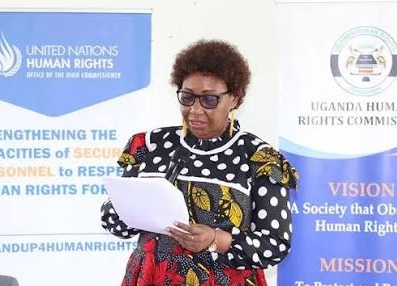
Among the leading candidates are Justice Musa Ssekaana and Uganda Human Rights Commission (UHRC) Chairperson Hon. Mariam Wangadya.
While neither has publicly confirmed interest, sources say both enjoy strong support from different quarters.
Wangadya’s supporters highlight her track record at the UHRC, where she has significantly increased tribunal efficiency, reportedly delivering approximately 20 decisions within two days—a pace rarely seen in Uganda’s appellate courts.
Her previous role as Deputy Inspector General of Government is also seen as a strength, given President Yoweri Museveni’s stated interest in appointing leaders with unblemished records.
Justice Ssekaana, formerly head of the Civil Registry at the High Court, is regarded as a rising star in the judiciary.
Some Muslim leaders view him as a historic contender for Uganda’s first Muslim Chief Justice.
Bowever, complaints regarding alleged bias in certain cases and criticisms of his courtroom conduct have complicated his candidacy.
Sources say that the Uganda Muslim Supreme Council and the Kibuli-based Supreme Mufti leadership are lobbying for a Muslim candidate.
At the same time, President Museveni is reported to prioritize integrity and competence over religious considerations.
Insiders also suggest that some opposition to Wangadya may stem from her close access to the president and her role in exposing corruption networks in Parliament.
A whistleblower report circulating online has raised further questions about her suitability, although media houses are reportedly waiting for official investigations before publishing details.
Observers say the appointment will signal the president’s priorities for the judiciary—whether emphasis will be on gender inclusivity, anti-corruption credibility, or consolidating influence.
Other potential candidates include Court of Appeal judges Geoffrey Kiryabwire, Barishaki Cheborion, and Egonda-Ntende.
Eligible candidates must hold a law degree and have served as judges at the High Court, Court of Appeal, or Supreme Court. Advocates with at least 15 years of experience are also eligible.
Sources indicate that President Museveni is keen to conclude the appointment before the next swearing-in to avoid a leadership gap in the appellate system, following his directive that village elections be completed by May 2026.
The coming weeks are expected to reveal how the balancing act between merit, integrity, religious considerations, and gender representation will shape Uganda’s judiciary.